An iNaturalist big bang – Finding a new beetle for BC
Categories:
Guest blog by Nathan Earley, PhD candidate and researcher with the BC Biodiversity Program. The BC Biodiversity Program is funded in part by the BC Parks License Plate Program.
If you’re a fan of the outdoors, you’ve probably had that awkward moment when you identify a plant or animal with pride (and a hint of swagger) only to find that you’ve been a little over-confident in your skills. “Well actually it’s…” your friend exclaims, the smug excitement in their voice echoing across the mountain peaks around you. You return to your hike, tail between your legs, behind your gleeful friend.
But making mistakes is a big part of learning, and for those of us who love finding and identifying new organisms, it’s just something we’ve come to accept. The members of the BC Biodiversity Program field crew get proven wrong a lot. They explore BC with a focus on parks and protected areas, taking pictures of flora, fauna, and fungi as they go, and posting those “observations” to a website/app called iNaturalist, where they are identified by a community of other users.
In June of 2021, one of the team members found a beetle that he had seen a million times before, a cute little weevil not much bigger than a fruit fly named Larinus minutus. He took a terrible picture of it on his phone and uploaded it to iNaturalist. Two hours later, another iNaturalist user had added an identification to the observation—but instead of Larinus minutus, it was identified as a different weevil called Bangasternus. These different weevils had never been recorded in BC, or anywhere else in Canada for that matter. This identification started a real kerfuffle (well, at least a hubbub) for such small creatures; biologists around BC started looking for the weevil, and they found it throughout the dry valley bottoms of the southern interior. Interestingly, the BC Biodiversity Program field team had already found the new weevil from Kamloops to Osoyoos, although they didn’t know how significant these observations were at the time.
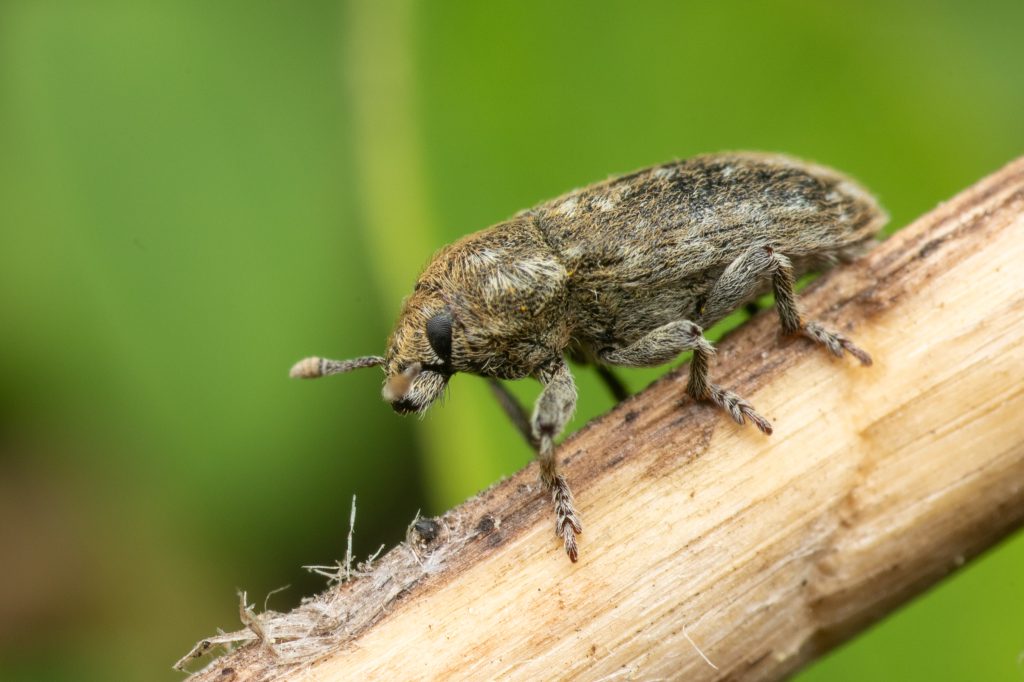
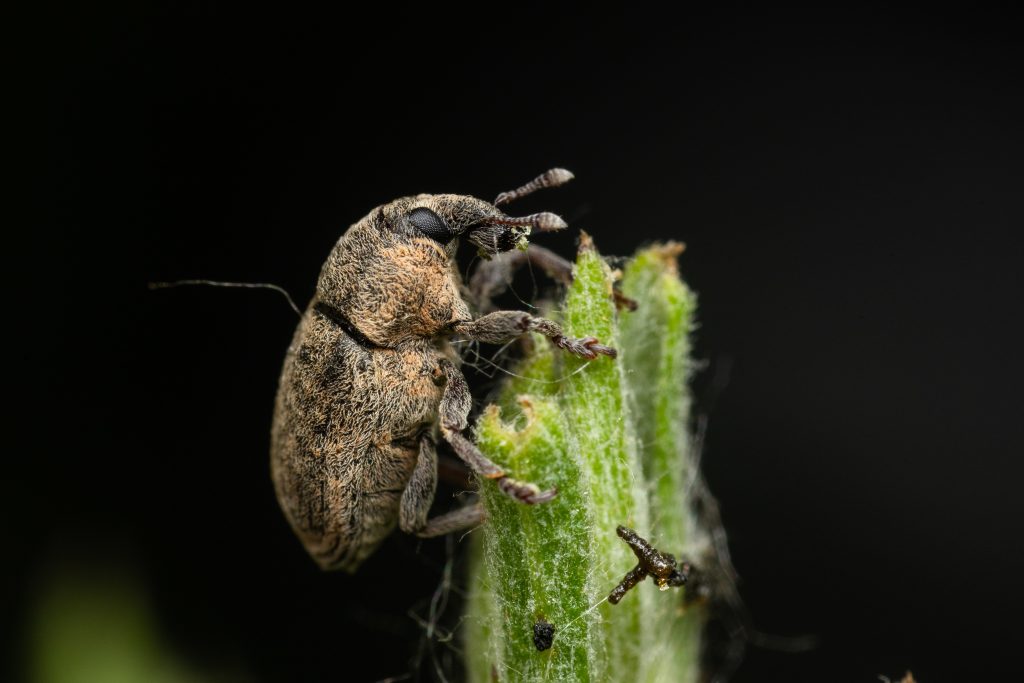
Like the Larinus weevils already recorded in BC, Bangasternus weevils are picky eaters that feed on invasive plants called knapweeds, especially diffuse knapweed. Knapweeds are problematic plants in BC, negatively impacting natural spaces like meadows, parks, and trails, as well as agricultural lands. But populations of diffuse knapweed have drastically declined in recent decades, largely due to the use of “biological control agents”—insects like the Larinus weevil (more info here). Biological control agents are organisms that eat, infect, or compete with invasive plants or animals that are considered pests; after much testing, they are introduced to an area to reduce the impacts and slow the spread of the invasive species (learn more about biological control here). Because these weevils are so selective in what they eat, they can decrease knapweed populations without impacting other plants and animals. Bangasternus weevils are also biocontrol agents for diffuse knapweed, but they were never introduced into Canada.
Finding these new weevils in BC is a big deal for the control of diffuse knapweed. It means that there’s another weevil eating the invasive plant—a great thing for cattle ranchers and native ecosystems alike. It also raises a lot of questions: How long have Bangasternus been here? Where exactly did they come from? How are they influencing the control of diffuse knapweed in BC? These are all questions that we wouldn’t even know to ask if the right person hadn’t been wrong and posted that crummy picture to iNaturalist.
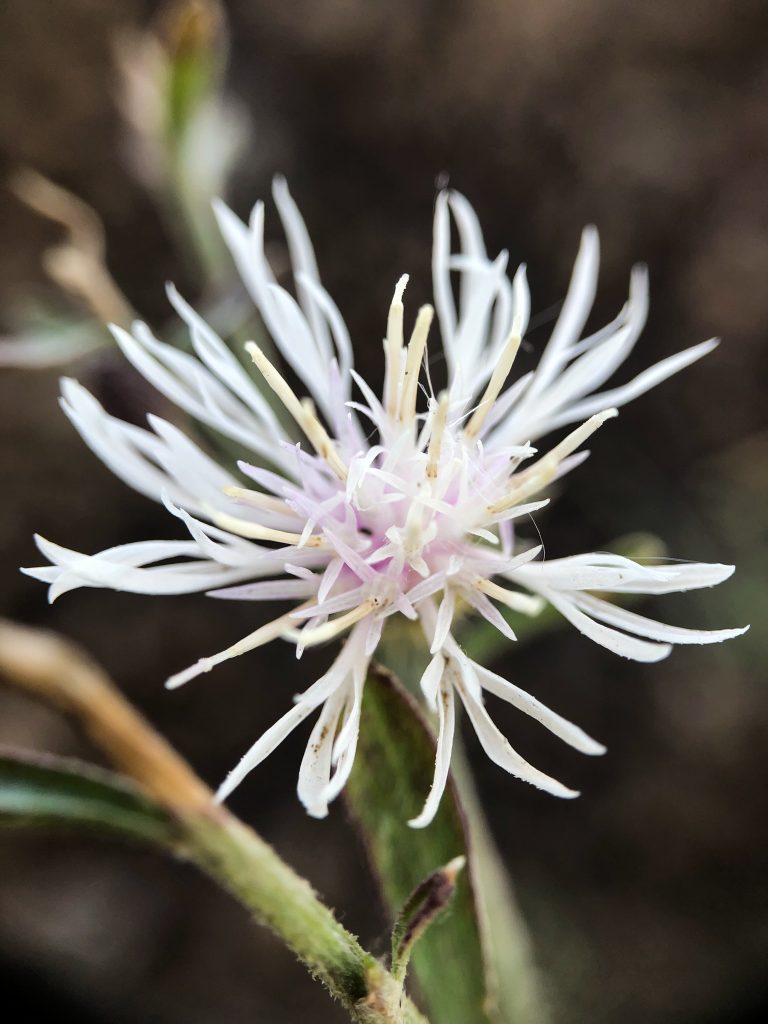
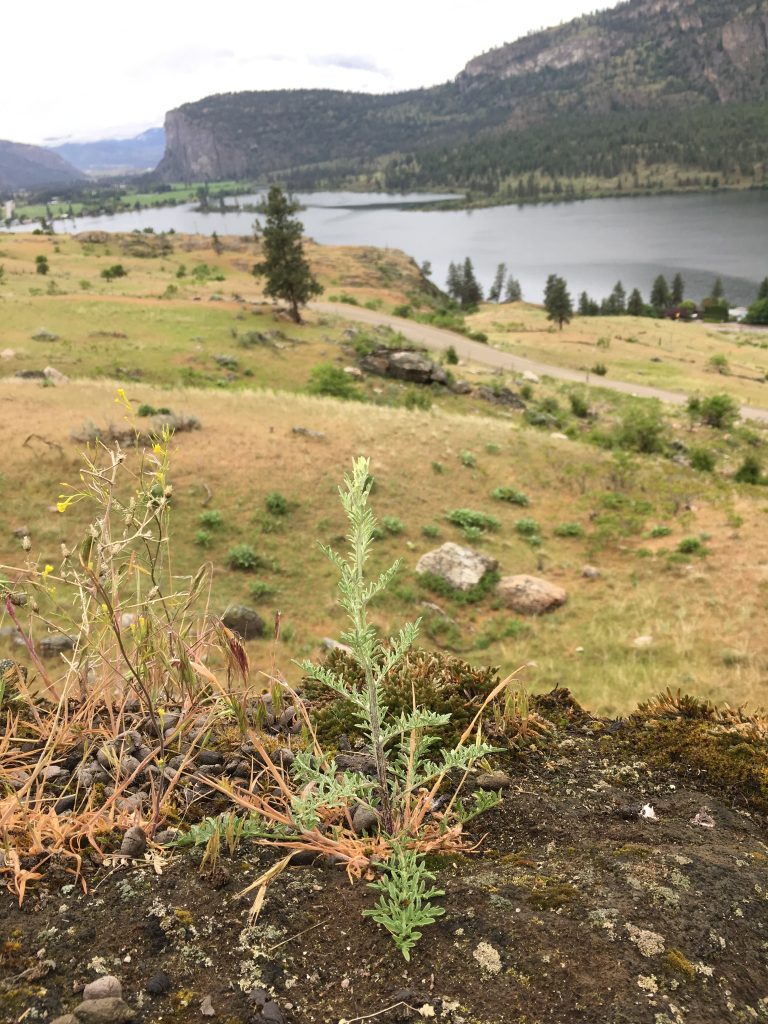
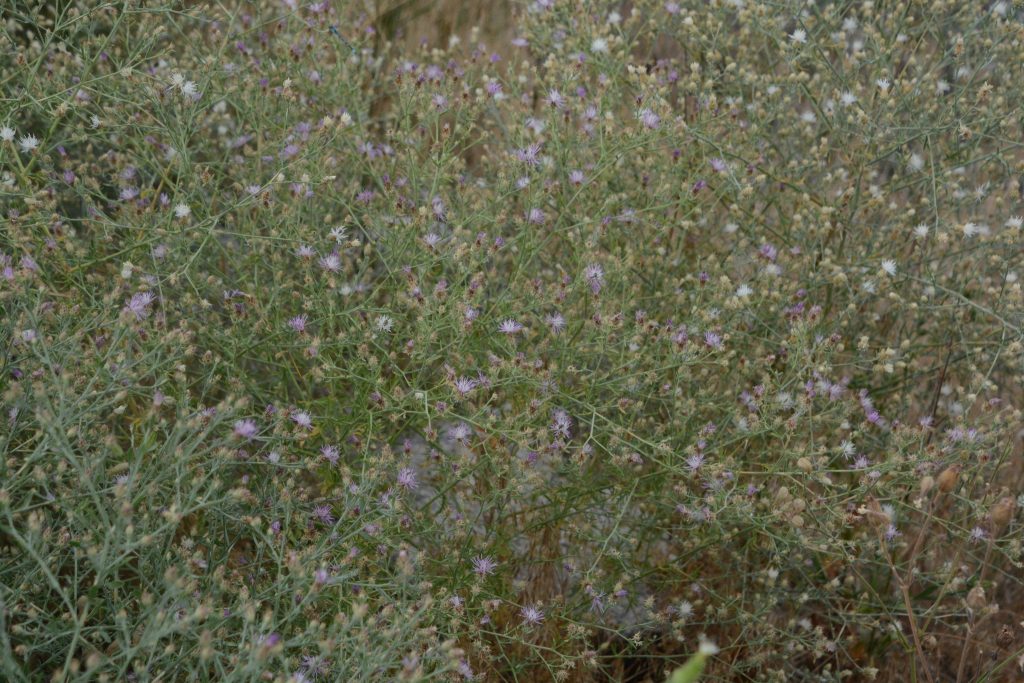
Diffuse knapweed, the invasive plant that the new Bangasternus weevil loves to munch, in or near Okanagan parks and protected areas. Photos by BC Biodiversity Program field team members Jason Headley, Katie Kushneryk, and Finn McGhee.
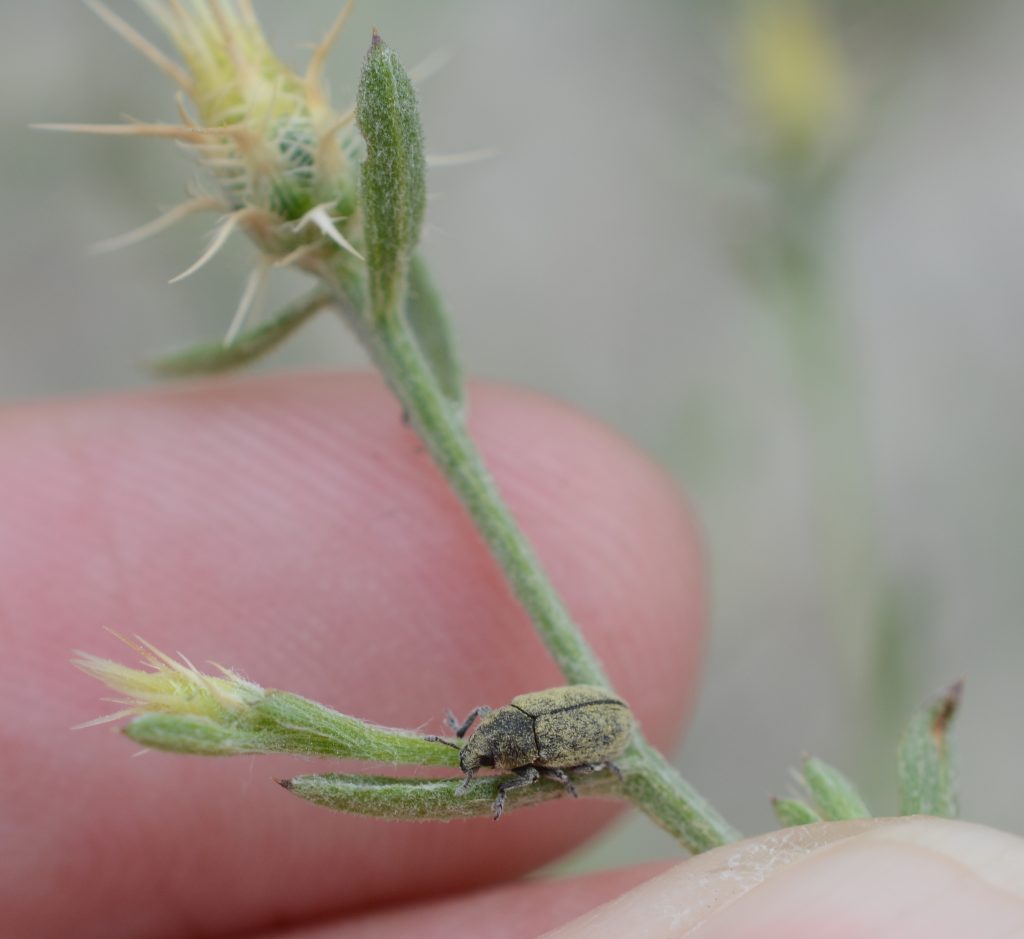
The finding of Bangasternus (later fine-tuned to the species Bangasternus fausti) in BC is reported in a newly published scientific article in the international beetle research journal “The Coleopterists’ Bulletin.” The article uses iNaturalist observations from many people—but especially from the BC Biodiversity Program field team—to show where these weevils occur in BC and western USA. This example highlights the value of contributing photos to iNaturalist, and the importance of experts helping people to identify the organisms that they find and photograph.
Using iNaturalist is easy and fun. It’s a great way to learn to identify an organism that you encounter while out on a hike or in your backyard, and there’s an enthusiastic community of people who want to help you to identify the neat stuff that you’ve found. You can find out more about iNaturalist.ca and the iNaturalist app at https://inaturalist.ca/pages/about-inaturalist-canada-en. The next time you visit a BC Park, consider adding your pictures of the cool plants and animals that you see to this huge dataset: you never know what you might find!
“There’s a fine line between wrong and visionary” –Sheldon Cooper, The Big Bang Theory