Finding fungi in unexpected places
Categories:
Guest blog by Elora Adamson, 2025 field team member with the BC Biodiversity Program.
A research permit is required to collect mushrooms or other biological material in BC Parks. Portions of the South Okanagan Grasslands Protected Area were closed at the time of publication. Check the BC Parks website for up-to-date information on closures.
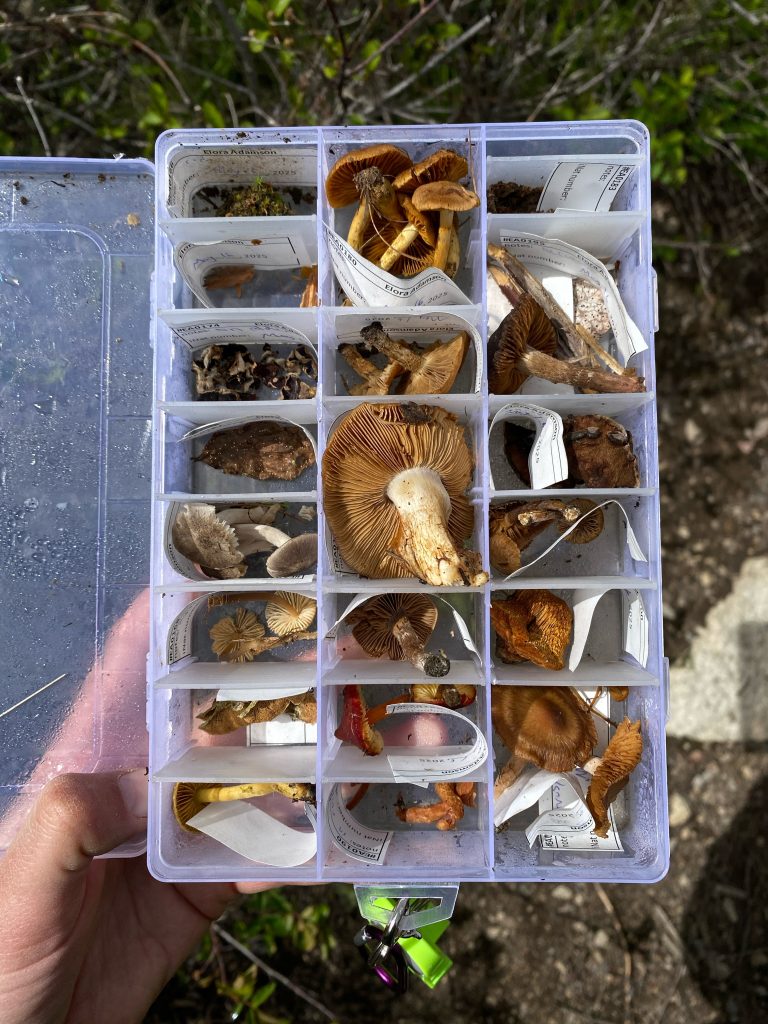
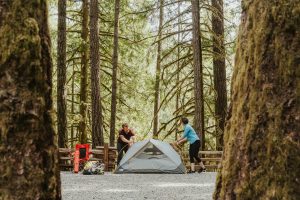
Before traveling to the Okanagan, my coworkers told me I probably wouldn’t find any fungi there. We had just finished our first trip as the 2025 team for the BC Biodiversity Program, visiting Texada Island and the Sunshine Coast. Our job for the summer was to travel around the province and visit provincial parks and protected areas, using iNaturalist to record our nature observations. We also collected limited samples of things that can be hard or even impossible to identify accurately without laboratory-based tests, such as mushrooms, mosses, and lichens. Our team was composed of five people, each with their own specialties and interests—and mine was fungi. I had found plenty of mushrooms to collect on that first trip, and I had expected to; the coast was relatively damp and our visit in April and May marked the tail end of the spring fungi season.
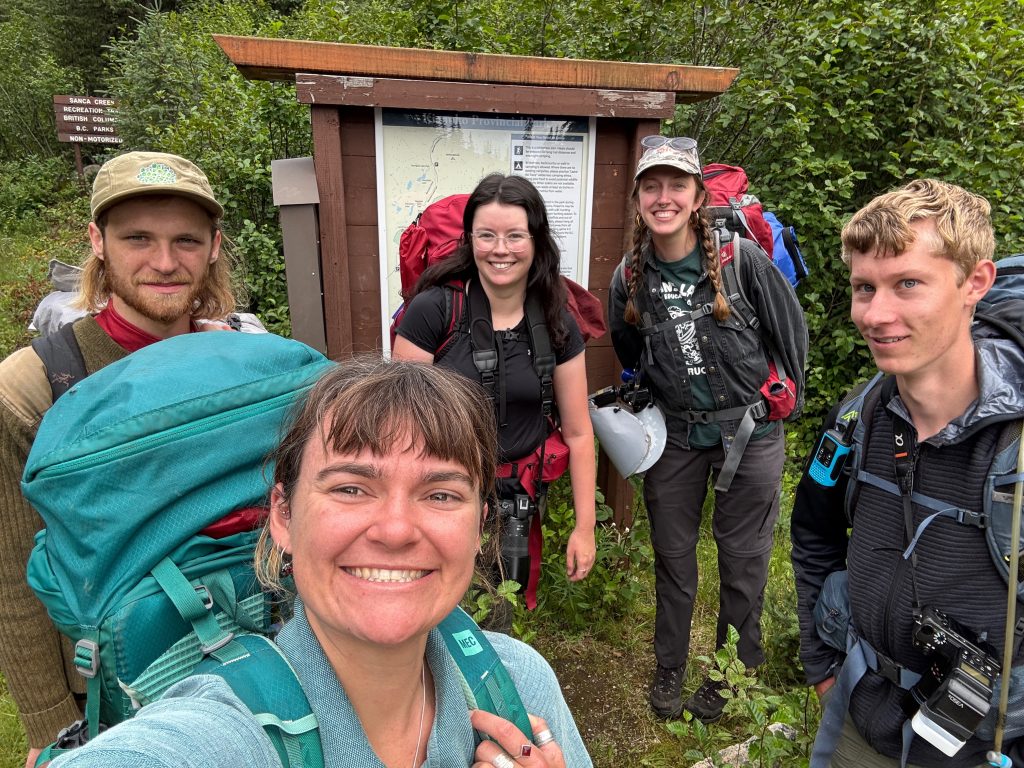
People often ask me, “where is a good place to go to look for fungi?” I usually tell them to search anywhere with moisture and lots of trees. The dry South Okanagan environment where we were looking forward to spending 11 days on our next trip in May certainly didn’t fit these characteristics.
There is an abundance of beautiful provincial parks and ecological reserves in the South Okanagan area, and from the get-go, I was seeing more fungi than I expected. Like many areas in B.C., mushrooms in the Okanagan are relatively under-studied, and so collecting samples is important to knowing more about fungi in this area (note: collecting requires a permit). To my surprise, I ended up making about 180 fungi collections over the course of the trip—a decent chunk of the over 800 I collected from April to August. Even when my team returned to the Okanagan in July, when things had really dried out, I still managed to find fungi.
These collections were dried and packaged with a slip that connects them to an associated iNaturalist observation. They were then sent to Mycota Lab for DNA sequencing as a part of the new MycoMap BC project. The results from the DNA analyses will help us better understand the biodiversity of fungi here in British Columbia. Often, sequencing results upend what we thought we knew about mushrooms (sometimes to mycologists’ dismay). It tells us that a species that has been going by the name of a mushroom described from Europe is not actually the same and requires a new name here in B.C. It tells us that what we were calling one species is actually different species, or that a species needs to be moved into a different group.
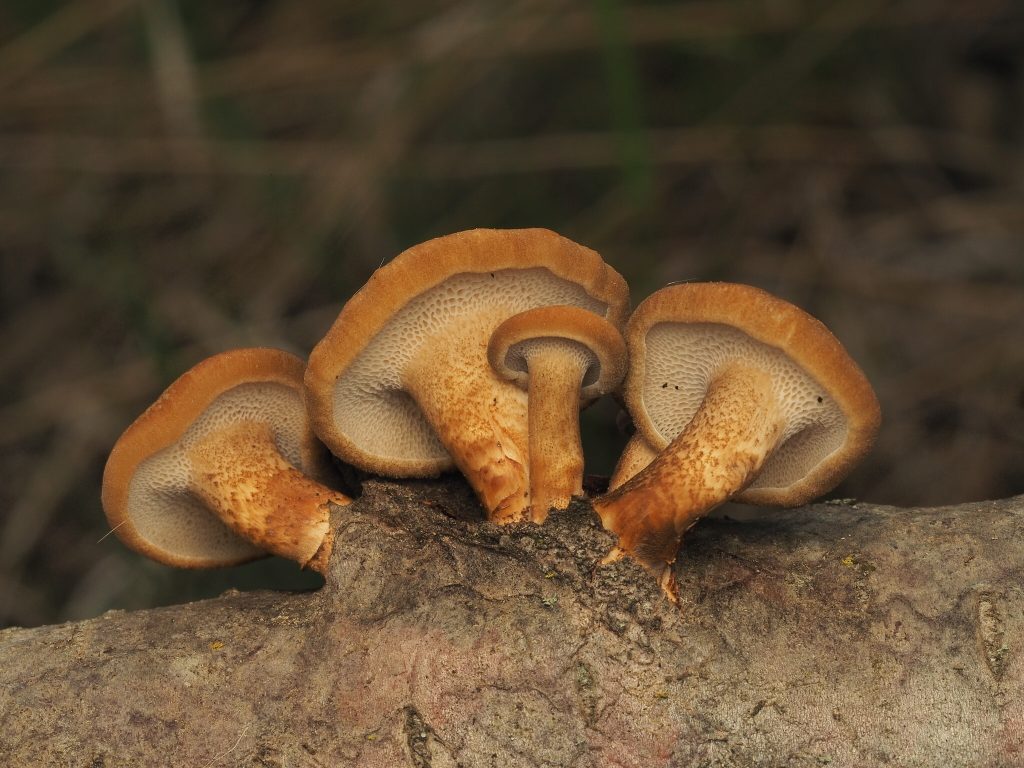
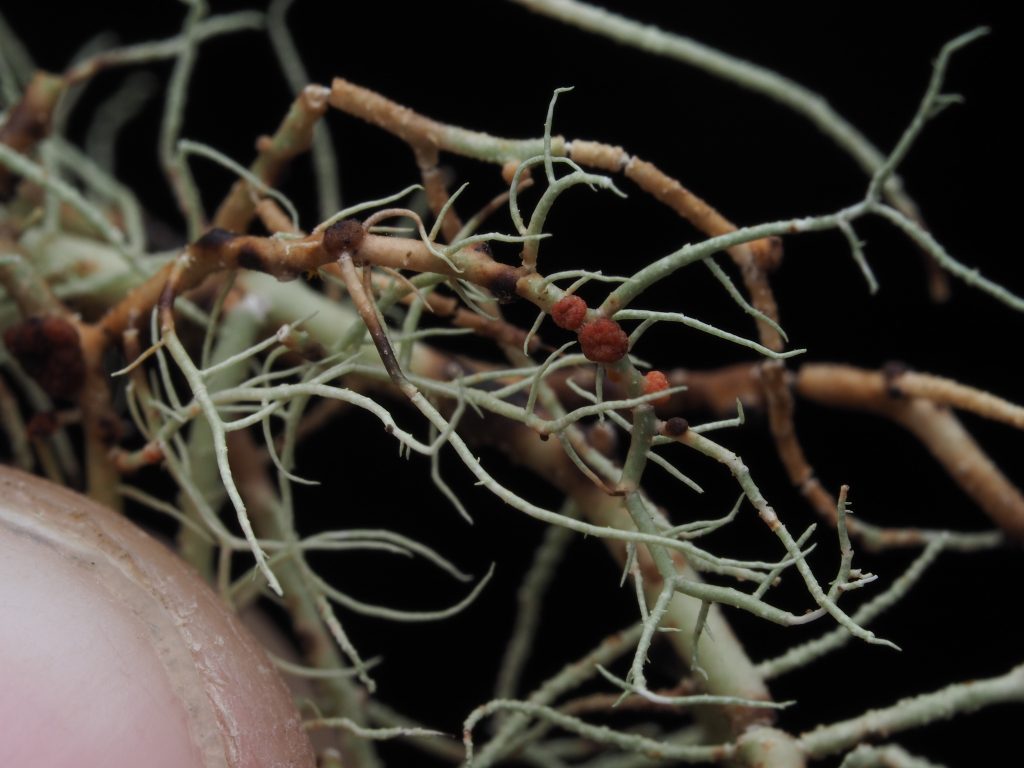
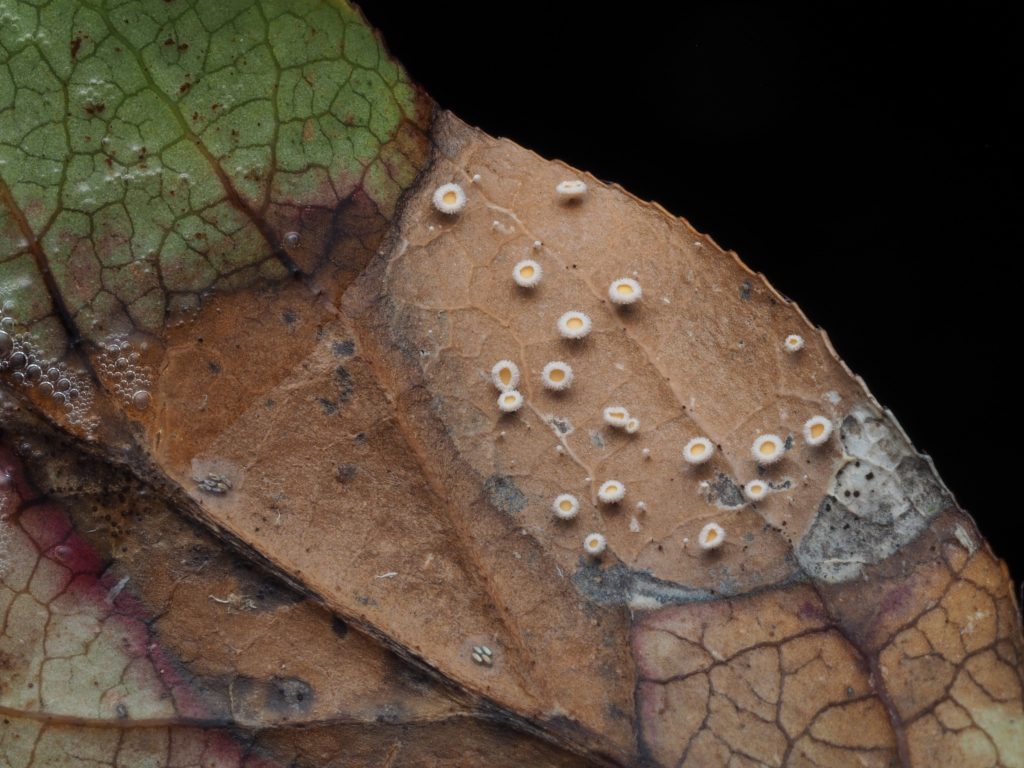
Despite the dry Okanagan landscape, I was able to find interesting mushrooms in a variety of habitats. This pattern continued throughout the drier summer months in each region we visited. Over the summer I became better at finding fungi in niche habitats and sought out fungi that fruited into mushrooms in unexpected places, where most might not think to look. Many specialized fungi have a term describing their habitat/habit—where and how they live —such as resinicolous fungi (fungi that fruit—grow mushrooms—on plant resins or sap), lichenicolous fungi (fungi that live in association—including on—lichen), bryophilous fungi (fungi that live in association with moss), sphagnicolous fungi (fungi that live with sphagnum moss in particular), nivicolous fungi (fungi that fruit in and around snowbanks), coprophilous (fungi that live on dung), foliicolous (fungi that fruit on plant leaves) —the list goes on.
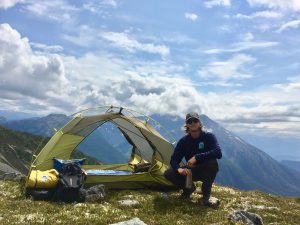
The snowmelt-associated fungi I found in the Okanagan was particularly exciting to me. During the cumulative month we spent in the Okanagan this year, we went up Mount Kobau four times. With its peak at 1900 metres, there was still a few feet of snow at the top when we first visited in May. I had told everyone on the team to holler if they spotted any mushrooms growing in or near the snowbank. It wasn’t more than 5 minutes after getting out of the truck that we all started seeing them. It was my first time seeing species such as the aptly named snowmelt clitocybe (Clytocybe glacialis) and Crassisporium funariophilum (which has no common name). Also exciting was a large clump of mushrooms fruiting at the base of a stump sticking out of the snow. While I didn’t immediately recognize them, I figured someone else with more expertise would. However, when I posted the pictures to a Facebook group filled with dozens of experts, there was no consensus. The post ended up with 27 comments, and 4 different groups it could belong to were suggested. A few people were interested enough in the find to message me to make sure I was going to get the mushroom sequenced. While it’s possible these DNA sequencing results will determine it’s a common mushroom with an unusual appearance, it demonstrates how useful DNA sequencing can be to getting an ID.
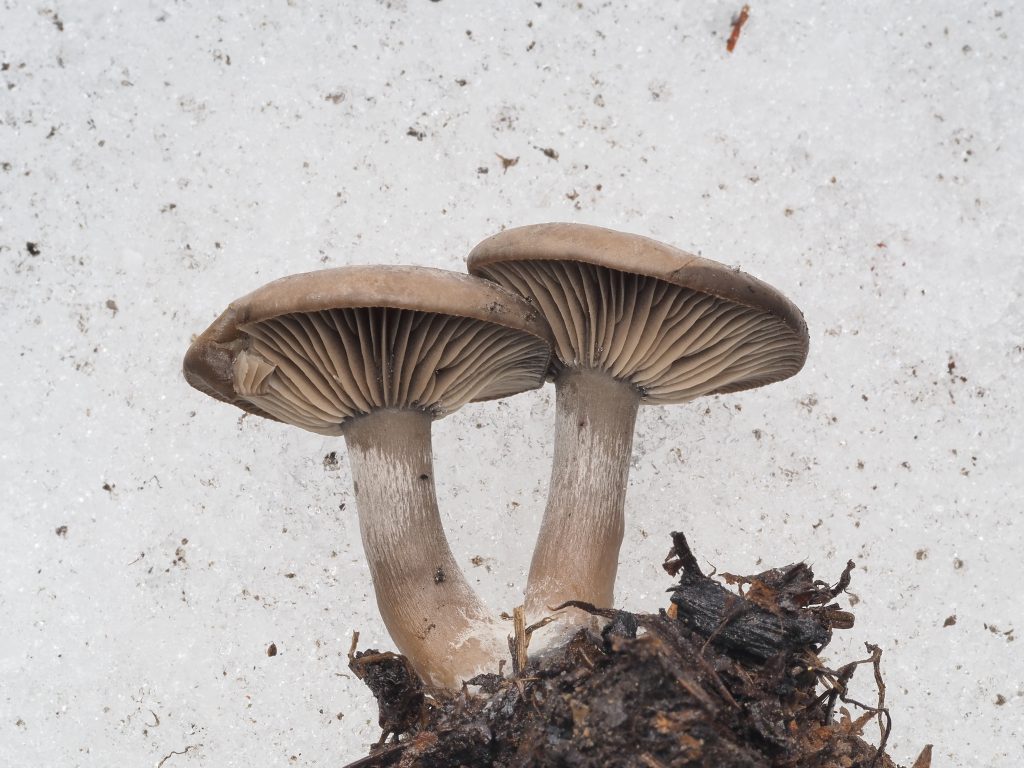
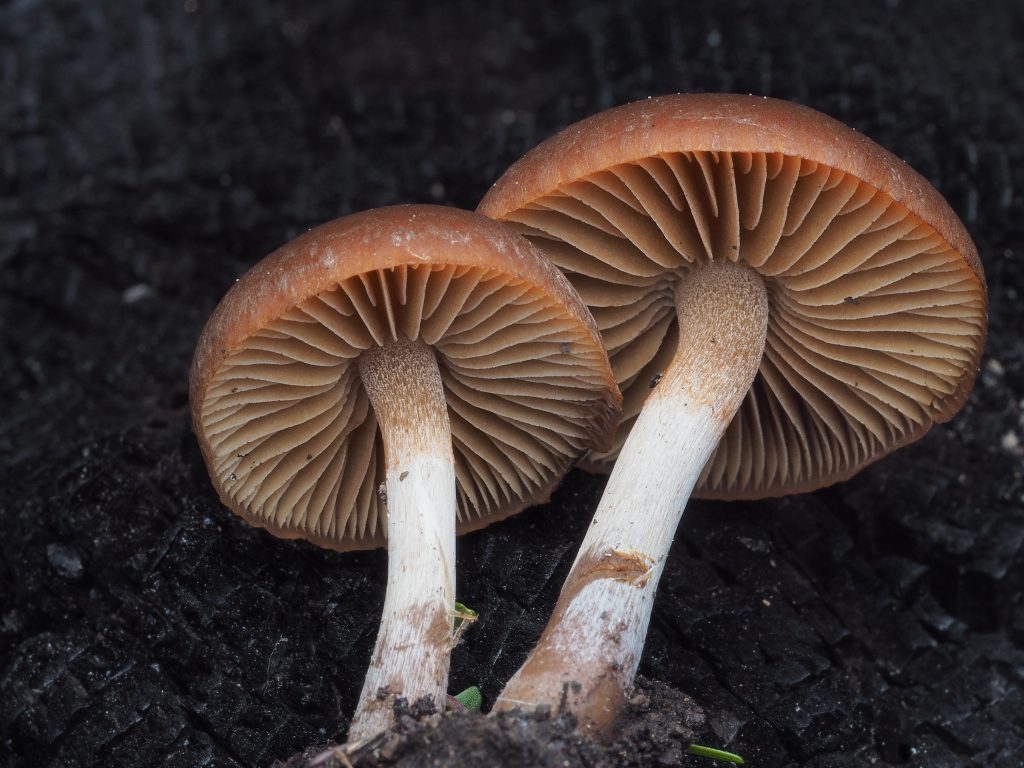
As the field season ended and fall — prime mushroom time—rolled in, I continued to collect fungi in provincial protected areas while uploading the over 1000 collections I made during the summer with their DNA sequencing results, helping me to put names to tricky-to-ID mushrooms. Anyone can seek out weird and interesting fungi near them and send it for DNA sequencing for free through the MycoMap BC Program (just ensure you have any relevant permissions to collect—research permits are required to collect in BC Parks)! Doing so will provide much needed data to help us expand our understanding of fungal biodiversity in British Columbia.