
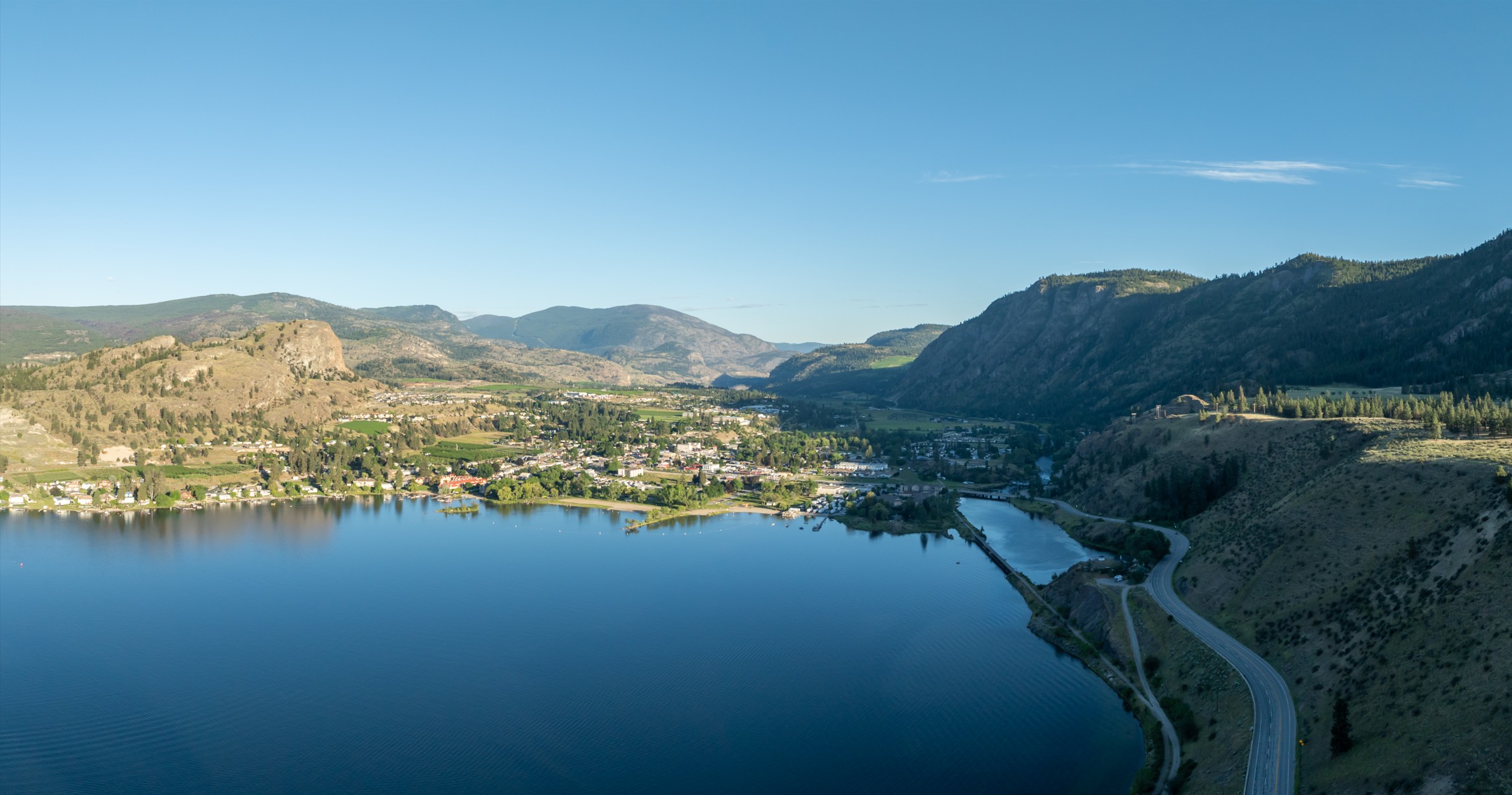
Municipal Incorporation Process for Okanagan Falls
Overview
Dates: April 8 to April 30
Who:
- The Ministry of Housing and Municipal Affairs
- Residents of the community of Okanagan Falls
- The Osoyoos Indian Band
What: The municipal incorporation process for the Okanagan Falls community
Where: Regional District of Okanagan Similkameen Electoral Area D
Why: To provide updates on the process and ensure it continues to have community input
How: Online, in-person
Engagement summary
In March 2025, residents of the Okanagan Falls community voted for incorporation (to become a new municipality). The Province issued the Letters Patent for the new municipality in June 2026.
The process followed these phases, as shared in August 2025:
- Development and Approval of Letters Patent
- Appointment of interim Corporate Officer and Chief Election Officer (underway)
- Election of mayor and council during the general local election (October 17, 2026)
- Incorporation date (the date of the first council meeting, November 6, 2026)
Learn more about the incorporation process below.
Read the March 22, 2025 news release
Learn more about municipalities in B.C.
Open house
On April 23, the ministry held an open house to share project details with community members. Below are the poster boards that were shared during the open house. You can press play to autoplay the slideshow or scroll through the slideshow by clicking the directional buttons or images. Clicking an image will enlarge it.
Results
The Province issued the Letters Patent for the new municipality on June 24, 2026. The new municipality will be called the District of Okanagan Falls.
Read the June 24, 2026 news release
Read the Engagement Summary (PDF, 92KB)
What’s next
The next steps include the Province appointing the Chief Election Officer (CEO) and an Interim Corporate Officer (ICO).
The CEO will prepare the new municipality for its first election, which will take place alongside the general local elections being held province-wide on October 17, 2026.
The ICO is appointed by the Province to undertake preparations for the startup of the new municipal administration and the inaugural council meeting.
The ICO typically manages financial and administrative arrangements, and events and protocols that are observed at or leading up to the inaugural council meeting. This can include:
- Choosing the location of the council meeting
- Ceremonial and protocol considerations
- Providing an orientation to council procedures
- Preparation of a procedure bylaw to be adopted and guide the council meetings
Overview of incorporation
Letters Patent
Letters Patent are the establishing legal document, or “birth certificate,” of a local government.
The Letters Patent set out the basics – including its name, boundaries and date of incorporation – and they transfer community services such as water, sewage treatment, and fire protection from the regional district to the new municipality.
Once they come into effect, the new municipality can exercise any municipal authority and must observe any requirements established by legislation (such as the Local Government Act, the Community Charter, the Heritage Conservation Act and the Declaration on the Rights of Indigenous Peoples Act).
Municipal incorporation in B.C.
This municipal incorporation will be the first in B.C. in 16 years. The last time a new municipality was incorporated was the Sun Peaks Mountain Resort Municipality in 2010.
Within the last ten years, two other communities considered incorporation: Salt Spring Island and Sorrento/Blind Bay. In the referendums that took place, residents of both areas voted to not proceed.
What incorporation means
Incorporation generally consolidates local services provided by a regional district (i.e., water, sewer, land use planning) and key provincial government services (i.e., road maintenance, tax collection) under a new municipal organization. This new municipality then becomes financially responsible for those services (i.e., through taxes).
In terms of representation, rather than having a single Electoral Area Director for their rural area, municipalities are governed by an elected municipal council that is made up of a mayor and 4 to 10 councillors.
Based on the size of the community and consultation with the Regional District of Okanagan-Similkameen, Letters Patent for Okanagan Falls have provided for a mayor and four councillors.
After incorporation, residents may also have opportunities to:
- Serve on advisory committees established by council
- Provide input at council meetings
- Run for elected office as mayor or councillor
Involvement of Osoyoos Indian Band
The area approved for municipal incorporation lies within Osoyoos Indian Band territory and includes unresolved land claims going back to pre-Confederation. This area also includes Osoyoos Indian Band’s historic Dog Lake Indian Reserve No. 2, which was allotted in 1877, alongside the permanent fishing village known in nqilxʷcən/nsyilxcən as sx̌ʷəx̌ʷnitkʷ (little falls).
As an important fishing and former village site, the area contains cultural heritage and archeological resources throughout that are of strong cultural and historical significance to Osoyoos Indian Band and the broader Syilx Okanagan Nation.
Under the Constitution Act, 1982 and the Declaration Act, the Province consults with First Nations that may be impacted by the change of governance. Involving Osoyoos Indian Band in the incorporation process builds a strong foundation for a constructive and collaborative relationship between the new municipality and Osoyoos Indian Band. This will help bring the certainty that all parties are looking for.
Municipal name and identity
June 24, 2026 update:
The new municipality will be called the District of Okanagan Falls.
Naming the municipality
Naming is a part of the incorporation of a new municipality and needs to be in the Letters Patent.
A name represents community identity, and we have heard feedback from many community members about the importance of the community’s name to them. Naming options for the Letters Patent reflect public sentiment, our shared partnerships, and the history of people and the land.
Okanagan Falls is located within the traditional territory of the Syilx (Okanagan) People – represented in the immediate area by the Osoyoos Indian Band, who have lived in and cared for this area for thousands of years.
Name possibilities considered
The Province considered a dual English and nqilxʷcən/nsyilxcən name for the municipality – one that retains “Okanagan Falls” as part of the name and recognizes the area’s shared history and future. There are many examples of provincial parks with dual names (like ȽÁU,WELṈEW̱/John Dean Park in southern Vancouver Island).
Boundaries and services
Municipal boundaries
Municipal boundaries are defined in their Letters Patent, which are passed into law by cabinet.
When considering whether to pass Letters Patent incorporating a municipality, discussions about the boundary are informed by:
- The incorporation study that concluded in November 2024
- Ongoing provincial engagement with Osoyoos Indian Band and the Regional District of Okanagan-Similkameen
(Update June 2026) All private land within the area eligible to vote on incorporation will become part of the new municipality, with the exception of two neighbouring parcels held by the Osoyoos Indian Band and their members. Consistent with other incorporations, most Crown land has been excluded as it is largely exempt from local government jurisdiction.
Decision-making
Like all other local governments, a new municipal council will be accountable to voters for decisions it is empowered to make under provincial law.
The Province is also exploring how Osoyoos Indian Band could engage with a new council as part of a new government-to-government relationship. Many local governments have worked with First Nation partners to enter into agreements on areas of mutual interest.
More information about municipal powers and service
Development services
Development services will become a municipal responsibility and be subject to the bylaws and policies of the new municipal council.
The only change to development processes will be subdivision approval, which will transfer from the Ministry of Transportation and Transit to the new municipal council.
Other services
Most regional district services will become municipal services over the next few years. This includes, for instance, water, sewer, and street lighting services.
Related engagements