
Frequently Asked Questions
The following is a list of frequently asked questions regarding the Columbia River Treaty.
The Columbia River Treaty Review included consultation with First Nations, and engagement of stakeholder groups and the public, including youth. The Ministry of Energy and Mines Columbia River Treaty Review Team worked closely with the Columbia River Treaty Local Governments’ Committee, to understand and consider their constituents’ views.
The Columbia River Treaty Review Team also worked with the Federal government and other provincial agencies to ensure a streamlined, effective approach to the Review.
The Canada-British Columbia Agreement (1963) transferred most treaty rights and obligations to the Province.
Although this agreement retains Canada’s constitutional jurisdiction for international treaties, it requires Canada to obtain the concurrence of the Province before terminating or amending the Columbia River Treaty.
Canada and British Columbia are cooperating in the review and any future decisions.
The federal government supports British Columbia’s lead procedural role in the Columbia River Treaty Review, however each government will have their own decision making process.
The Bonneville Power Administration and the U.S. Army Corps of Engineers are responsible for implementing the Columbia River Treaty on behalf of the United States.
They conducted a multi-year review process, the 2014/2024 Columbia River Treaty Review, to consider options in advance of 2014 in order to be able to make a recommendation to the United States Department of State on whether or not to give notice to terminate the Columbia River Treaty.
This process resulted in the U.S. Entity Regional Recommendation for the Future of the Columbia River Treaty after 2024, which was forwarded to the U.S. Department of State in December 2013.
Columbia River Treaty Review public engagement was intended to be a meaningful and constructive process informed by the following principles:
- Inclusive, Transparent and Honest
- Consult on the design of the public engagement process in consideration of participants’ needs, local methods of participation and representation, and logistical constraints.
- Encourage open sharing of all relevant perspectives and respect all related viewpoints, information, experiences, interests, values and contributions.
- Include as many individuals as wish to participate in the process, and provide various ways to participate and be heard, including face-to-face meetings, by mail and online.
- Be clear with participants about their roles, constraints and opportunities to provide input into the decision process.
- Create Capacity to Participate
- Provide participants with as much information as possible to ensure they have the knowledge and confidence to participate in the consultation process
- Constructive Engagement
- Build on previous or existing processes.
- Listen, learn, provide clarity and address misunderstandings.
- Encourage high quality dialogue that recognizes all related interests, deepens understanding and builds relationships.
- Use diverse methods to ensure participants are engaged, share information, and provide feedback.
- Ensure an authentic process where public input will be considered by decision makers.
- Close the Loop
- Inform participants how their input was considered.
The Columbia River Treaty Review Team reviewed residents’ values and interests articulated in past community engagements on water management issues in the Columbia River Basin.
These include the Water Use Planning process (2000-2007) and the Non-Treaty Storage Agreement consultations (2011) carried out by BC Hydro, and the recent Columbia Basin Trust community information sessions on the Columbia River Treaty (2011-12).
We acknowledge the considerable time and effort invested in previous engagement processes and built on the information already gathered in carrying out the Columbia River Treaty Review public consultation process.
We engaged through this website, community meetings and a youth event. See the Columbia River Treaty Review Public Consultation Report for full details on the Public Engagement process.
Click here for ways to stay engaged on the Columbia River Treaty Review and potential future Treaty negotiations.
The Columbia River Treaty Local Governments Committee was formed in 2011. The regional districts of Central Kootenay, Columbia Shuswap, East Kootenay and Kootenay Boundary each appointed two members to the committee. The Village of Valemount and the Association of Kootenay Boundary Local Governments each appointed one member.
The Columbia River Treaty Local Governments Committee worked with the Columbia Basin Trust to create education and awareness activities in the region. They helped the Province understand regional views, values and interests with respect to the Columbia River Treaty.
In December 2013, the Local Governments Committee submitted their recommendations on the Columbia River Treaty to the provincial and federal governments for incorporation into the current decisions regarding the future of the CRT. For more information, visit their website: https://crtlgc.ca

103. Will the beach area and old town site of Burton be cleaned up of a lot of rusted metal, glass etc. that was left from the flooding? And is it a serious health and environmental concern?
Is there anything being done to clean up the Burton beach?
The area we live at is littered with debris, it is very dangerous, and it is a disgraceful mess to this beautiful valley. We, along with others request this be cleaned up. What couldn’t be burned was buried, and it is long past time for removal of vehicles, farm equipment, oil barrels etc. to bring back the natural beauty and to remove these dangerous items.
Regarding dangerous debris, what are the plans to clean up old townsite debris? i.e.: rusted metal, foundation debris and garbage?
If there are no such plans to remove the debris, then will BC Hydro assume liability for any and all injury to persons or persons property (watercraft) as a result of not removing the debris now surfacing as a result of lower water levels?
Answer from BC Hydro: In the fall/winter of 2023, BC Hydro undertook an inventory of the structures and materials that exist along the shores of Arrow Lakes Reservoir. This includes old building foundations, rusted metal, broken glass, and recent garbage. These structures and materials have now been assessed based on environmental considerations, archeological and heritage values, accessibility, and public safety concerns.
BC Hydro commenced work to start to remove some of these structures and materials in February of 2024. Work will take place over a four-week period, and efforts will be concentrated in high use areas that are easily accessible. Please note that in some areas, work can only be done by hand and without any excavation due to environmental considerations. Following this initial clean-up, BC Hydro will evaluate the remaining structures and materials for potential removal.
116. What is the plan to get salmon back? It’s not like you can just build a ladder at Grand Coulee Dam.
Answer from the B.C. Columbia River Treaty Team: Salmon restoration is being addressed in two different, yet parallel, processes – within the Columbia River Treaty context and outside of it.
There are some factors related to salmon survival in the Upper Columbia that are directly impacted by the Treaty and so must be part of Treaty modernization discussions. There has been encouraging progress at the negotiating table to determine what transboundary collaboration to support salmon reintroduction looks like. More details will be shared publicly once an agreement-in-principle has been reached.
Other factors, such as salmon habitat, are being addressed through the Columbia River Salmon Reintroduction Initiative – a collaborative effort between Indigenous Nations, B.C. and Canada to study the feasibility of returning salmon to the Upper Columbia River.
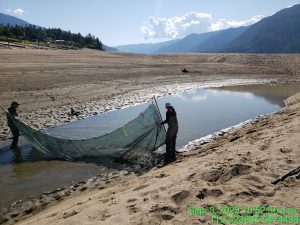
96. We are used to water level drops in the Arrow Lakes area. What is alarming is the rate of water released in gallons per day that was done during spawning season. Can an explanation be given for the rapid release of water during spawning season?
Answer from BC Hydro: Under the terms of the Columbia River Treaty, BC Hydro is required to continue to release water to the U.S. during periods of dry conditions. BC Hydro did not send any more water than what is absolutely required, and this was managed and reviewed daily as part of inflow forecasts and operations planning. BC Hydro and the U.S. coordinated additional storage in the spring of 2023 to support higher Arrow levels from May through June. However, any water stored in the spring was later released from July through mid-August to meet U.S. domestic needs as required under the agreement.
97. Is BC Hydro going to fund a fish ladder at Grand Coulee with their 8 billion profit last year?
Answer from BC Hydro: Fish passage in the U.S. portion of the Columbia basin is the responsibility of the U.S. government.
98. Will there be any initiatives to improve spawning channels on more creeks along the Arrow Lakes?
Answer from the B.C. Ministry of Water, Land and Resource Stewardship: The Hill Creek Spawning Channel provides enhanced spawning habitat for Arrow Lakes Reservoir and compensates for significant spawning habitat lost upstream of Revelstoke dam. Collectively, spawning habitat is not limiting for Arrow reservoir kokanee. Creating more spawning channel habitat elsewhere is not expected to improve overall kokanee outcomes. However, there are issues with spawner access and habitat for some of the smaller spawning tributaries which are of concern to the Province and BC Hydro. Those issues will not be resolved by constructing spawning channels but rather through site specific habitat improvement measures where feasible. Unfortunately, in years with low tributary flows into the reservoir due to climatic conditions (e.g. drought), particularly in combination with low reservoir levels, access to spawning habitat in some tributaries cannot be resolved through habitat improvement.
99. What is being done to address the low water levels and the impact to our fish and overall habitat loss in the Valley? The loss is extreme and should never be allowed to happen again. What is the plan moving forward?
Answer from BC Hydro: The Fish & Wildlife Compensation Program (FWCP) is a partnership between BC Hydro, the Province of B.C., Fisheries and Oceans Canada, First Nations and public stakeholders to conserve and enhance fish and wildlife in watersheds impacted by existing BC Hydro dams.
The FWCP is funded annually by BC Hydro. The FWCP directs those funds towards priority actions across its three regions to fulfil its mission and work towards its vision of thriving fish and wildlife populations in watersheds that are functioning and sustainable. The Fish & Wildlife Compensation Program conserves and enhances fish and wildlife in watersheds impacted by BC Hydro dams.
Although fish stranding is not an uncommon occurrence and can happen in any year, BC Hydro recognizes that the impacts were more significant under last year’s operating conditions. BC Hydro documented all reports of fish stranding on Arrow Lakes Reservoir during last year’s drought conditions. In addition, to minimize impacts to fish, crews were deployed to assess stranding sites and salvage fish where possible. 530 kilometres of shoreline were assessed to identify pools and focus ground surveys and salvage efforts, and 159 pools were sampled at 26 different sites.
Answer from the B.C. Ministry of Water, Land and Resource Stewardship: The Province, the Fish and Wildlife Compensation Program, and BC Hydro also surveyed creek mouths in advance of spawning migration to assess passage as well as collecting additional water temperature data. Ground and aerial counts for kokanee are complete and information indicates the kokanee spawner return increased compared to recent years and that fish were able to access the tributaries where the majority of fish in Arrow Lakes Reservoir return to spawn.
Answer from the B.C. Columbia River Treaty Team: Canada, B.C. and the Ktunaxa, Secwépemc and Syilx Okanagan Nations are seeking improvements in the Treaty through negotiations with the U.S. to reduce the type of impacts we’ve seen on Arrow Lakes this past year. The additional flexibility the Canadian negotiation delegation is seeking would allow B.C. to adjust its Treaty dam operations to support ecosystems (including fish), Indigenous cultural values, and socio-economic interests. There is river management scenario modelling underway that is informing how to use any new flexibility. Part of this involves looking at different elevations throughout the year on Arrow Lakes Reservoir. Research to determine objectives for this modelling process is being led by the Ktunaxa, Secwépemc and Syilx Okanagan Nations in collaboration with federal and provincial governments, the Columbia River Treaty Local Governments Committee and environmental non-governmental scientists and technical consultants.
100. Were there any environmental and/or biological studies completed in August and September 2023 relating to the impact low water levels have had regarding fish spawning, stranded fish in pools, mortality, and before and after fish population data (for the time periods of August to September 2023)?
Answer from BC Hydro: Although fish stranding is not an uncommon occurrence and can happen in any year, BC Hydro recognizes that the impacts were more significant under last year’s operating conditions. BC Hydro documented all reports of fish stranding on Arrow Lakes Reservoir during last year’s drought conditions. In addition, to minimize impacts to fish, crews were deployed to assess stranding sites and salvage fish where possible. 530 kilometres of shoreline were assessed to identify pools and focus ground surveys and salvage efforts, and 159 pools were sampled at 26 different sites.
Answer from the B.C. Ministry of Water, Land and Resource Stewardship: The Province, the Fish and Wildlife Compensation Program, and BC Hydro also surveyed creek mouths in advance of spawning migration to assess passage as well as collecting additional water temperature data. Ground and aerial counts for kokanee are complete and information indicates the kokanee spawner return increased compared to recent years and that fish were able to access the tributaries where the majority of fish in Arrow Lakes Reservoir return to spawn.
101. What are your plans to mitigate the impacts of rapid volume release of water during spawning periods?
Answer from BC Hydro: Under the terms of the Columbia River Treaty, BC Hydro is required to continue sending water to the U.S. during periods of dry conditions. BC Hydro did not send any more water than what is absolutely required, and this was managed and reviewed daily as part of inflow forecasts and operations planning. Unfortunately, BC Hydro does not have the unilateral rights to hold back flows for Canadian fisheries objectives without agreement from its U.S. counterparts.
The operation of Arrow Lakes Reservoir follows the Lower Columbia Fish Stranding protocol to help minimize impacts on fish by coordinating fish salvage response if needed during a flow reduction or implementing ramp rates as required to manage flow changes.
Although fish stranding is not an uncommon occurrence and can happen in any year, BC Hydro recognizes that the impacts were more significant under last year’s operating conditions. BC Hydro documented all reports of fish stranding on Arrow Lakes Reservoir during last year’s drought conditions. In addition, to minimize impacts to fish, crews were deployed to assess stranding sites and salvage fish where possible. 530 kilometres of shoreline were assessed to identify pools and focus ground surveys and salvage efforts, and 159 pools were sampled at 26 different sites.
Answer from the B.C. Ministry of Water, Land and Resource Stewardship: The Province, the Fish and Wildlife Compensation Program, and BC Hydro also surveyed creek mouths in advance of spawning migration to assess passage as well as collecting additional water temperature data. Ground and aerial counts for kokanee are complete and information indicates the kokanee spawner return increased compared to recent years and that fish were able to access the tributaries where the majority of fish in Arrow Lakes reservoir return to spawn. The Province through the FWCP enumerates kokanee spawners annually as a component of the Arrow Lakes Reservoir Nutrient Restoration Program and the Hill Creek Spawning Channel.
Answer from the B.C. Columbia River Treaty Team: As part of negotiations to modernize the Treaty, Canadian and U.S. delegations are looking at different ways of managing the volume and timing of water releases to support a wide range of interests in both countries, including fish spawning and other ecosystems objectives.
102. What future plans are being considered to avoid rapid water level drops (volume per day released through the dam)?
Answer from BC Hydro: Under the terms of the Columbia River Treaty, BC Hydro is required to continue sending water to the U.S. during periods of dry conditions. Last summer and fall, BC Hydro did not send any more water than what is absolutely required, and this was managed and reviewed daily as part of inflow forecasts and operations planning. Unfortunately, BC Hydro does not have the unilateral rights to hold back flows for Canadian objectives without agreement from its U.S. counterparts.
Answer from the B.C. Columbia River Treaty Team: As part of negotiations to modernize the Treaty, Canadian and U.S. delegations are looking at different ways of managing the volume and timing of water releases to support a wide range of interests in both countries. Further details are confidential as negotiations are still underway; however, before any agreement is finalized, we will explain to Basin residents what is being proposed and seek feedback.

93. What will the minimum water level be this winter? With the winter season coming it would be best to do what we can to our boats now and not during December or January in freezing temperatures and access compromised. Half of Scotties Marina is either on land or very shallow water and not usable. Some of the boats are larger and are moored year-round.
Answer from BC Hydro: Arrow Lakes Reservoir reached its latest minimum elevation of 422.7 metres (1,387 feet) on Thursday, January 11, 2024, for the winter of 2023/24. This year’s summer levels will be dependent on snowpack, rainfall, power generation requirements, Columbia River Treaty provisions, and other variables. If you would like to receive BC Hydro’s regular forecasts by email, please email southern-interior.info@bchydro.com.
94. Regardless of the Treaty outcome, why is our boat launches (Syringa) for example not being upgraded so they can actually be used more than 2 months of the year with the docks in the water?
It is completely ridiculous that all of our boat launches are unusable, this is absurd. What is being done to rectify this?
Answer from BC Hydro: As part of BC Hydro’s water licence, they are required to provide access to Arrow Lakes Reservoir during the peak recreation season. To meet this requirement, BC Hydro completed construction and upgrades of boat ramps for use during the recreation period, which is generally considered to be from mid-June to mid-September. The Comptroller of Water Rights has confirmed that, subject to meeting maintenance requirements, BC Hydro has met their obligations to provide access to the reservoir.
BC Hydro tries to make dock lengths as long as practically possible to cover water fluctuations during the summer boating season. Unfortunately, extending the length of the dock at Syringa is not technically feasible.
95. An acknowledgment of the many issues that have arisen since residents and friends of Arrow Lakes with specific follow up actions was not detailed or committed.
Answer from BC Hydro:
Reservoir clean up: In the fall/winter of 2023, BC Hydro undertook an inventory of the structures and materials that exist along the shores of Arrow Lakes Reservoir. This includes old building foundations, rusted metal, broken glass, and recent garbage. These structures and materials have now been assessed based on environmental considerations, archeological and heritage values, accessibility, and public safety concerns.
BC Hydro commenced work to start to remove some of these structures and materials in February of 2024. Work will take place over a four-week period, and efforts will be concentrated in high use areas that are easily accessible. Please note that in some areas, work can only be done by hand and without any excavation due to environmental considerations. Following this initial clean-up, BC Hydro will evaluate the remaining structures and materials for potential removal.
Fish Stranding: To minimize impacts to fish, crews were deployed to assess stranding sites and salvage fish where possible. 530 kilometres of shoreline were assessed to identify pools and focus ground surveys and salvage efforts, and 159 pools were sampled at 26 different sites. The salvaged fish are mostly small and young, the vast majority being Northern Pikeminnow, Redside Shiner, Carp, Suckers, Dace, and Sculpins.
Archaeology: The low levels also exposed archeological sites across the reservoir. Additional archeological assessments were completed in low elevation areas, and known exposed archeological sites were revisited. The preliminary results show several new sites were recorded, and several existing sites were expanded. BC Hydro also mobilized the Guardian Watch Program to have a presence on the reservoir and spread information about the importance of archeological resources.
Answer from B.C. Columbia River Treaty Team:
Mitigating low reservoir levels: Canadian negotiating team is seeking more flexibility for how B.C. operates its Treaty dams. The additional flexibility will allow B.C. to adjust operations to support ecosystems (including fish), Indigenous cultural values, and socio-economic interests, without agreement from the U.S. There is significant research and river management scenario modelling underway that is informing how best to use any new flexibility. Part of that research includes looking at different elevations throughout the year on Arrow Lakes Reservoir.
32. Why are we repeatedly told that the low water levels are the result of flood control and requirement of the Treaty to release 5500 m3/s when you may have heard the there is a drought from Mexico to the Yukon? No need for any flood control this year, levels could have been kept at 1440 since last February! Also, 5500 m3/s is a joke, as up to 58000 m3/s has been released from the Arrow Lakes this summer and now due to the extreme low levels now 680 m3/s are being realised! Meantime water is spilled and wasted in the U.S.A.!
Answer from BC Hydro: Under the terms of the Columbia River Treaty, BC Hydro is required to continue sending water to the U.S. during dry periods. BC Hydro did not send any more water than what is absolutely required, to meet legal Treaty obligations and this was managed and reviewed daily as part of forecasts and operations planning. There is no provision under the Treaty for Canada to hold back additional water during drought conditions.
Although the lowest possible release of water rate is 5,000 cubic feet per second (ft3/s), this does not mean this is all that BC Hydro is required to release. Discharges at 5,000 ft3/s would only be expected when the Treaty requires that more water is held in Canadian storage. A recent example is the week of February 10, 2024, when discharges from Arrow Lakes Reservoir were reduced to 5,000 ft3/s due to the atmospheric river event in the U.S., which resulted in significant inflows for the U.S. portion of the basin.
33. If both countries were to share benefits equitably, why does the U.S. have full lakes and reservoirs and Arrow Lake is empty. How is this fair or equitable?
Answer from the B.C. Columbia River Treaty Team: The objective of the power coordination provision in the current Treaty is to optimize electricity generation in the U.S. The downstream power benefits are shared between the two countries by way of the Canadian Entitlement.
Water that would have flowed from Arrow Lakes Reservoir to Lake Roosevelt and through Grand Coulee Dam was likely kept in Lake Roosevelt this year to prepare for winter power generation needs. Additionally, flows from Lake Roosevelt are often released through Grand Coulee Dam later in the year to enhance downstream salmon populations.
The Canadian negotiation delegation is seeking improvements to a modernized Treaty that not only reflects a fair, equitable sharing of benefits, but also reduces impacts to the B.C. portion of the Basin.
34. How can the Grand Coulee Dam light show be justified from May long weekend to September 30 every evening during a drought year or any year? It doesn’t appear this waste of water is part of the CRT.
That light show flows water for approximately 39 minutes everyday day during those months.
It is also tough to think we are in drought when they spill water over Coulee for a light show every night during summer.
It would also be appreciated to know that we are holding the U.S. accountable for their water waste with the Grand Coulee Dam nightly water wasting show. Totally unnecessary in a drought year.
Answer from the B.C. Columbia River Treaty Team: The Treaty does not oblige the U.S. to use water in any particular way. In fact, under the Treaty, both countries are able to use water for their own domestic purposes. Once water flows across the border, the U.S. can manage it for any downstream purposes.
35. The treaty was designed for flood control and power generation; therefore why is the water diverted from Grand Coulee Dam to IRRIGATE their dry barren land, to plant and sell crops? Irrigation was not part of the Treaty agreement.
Answer from the B.C. Columbia River Treaty Team: Under the Treaty, both countries can use water for their own domestic purposes, including to support irrigation, navigation, and fisheries. Once the water crosses the border, the U.S. can manage it to meet any number of domestic objectives.
Canada, B.C. and the Ktunaxa, Secwépemc and Syilx Okanagan Nations are seeking changes in the Treaty through negotiations with the U.S. that recognize the many ways the U.S. benefits from B.C.’s Treaty flow regulation.
36. Where is this drought that you keeping talking about? The Columbia River to the Tri-cities in Washington State has been full all summer and we have nothing. WHY?
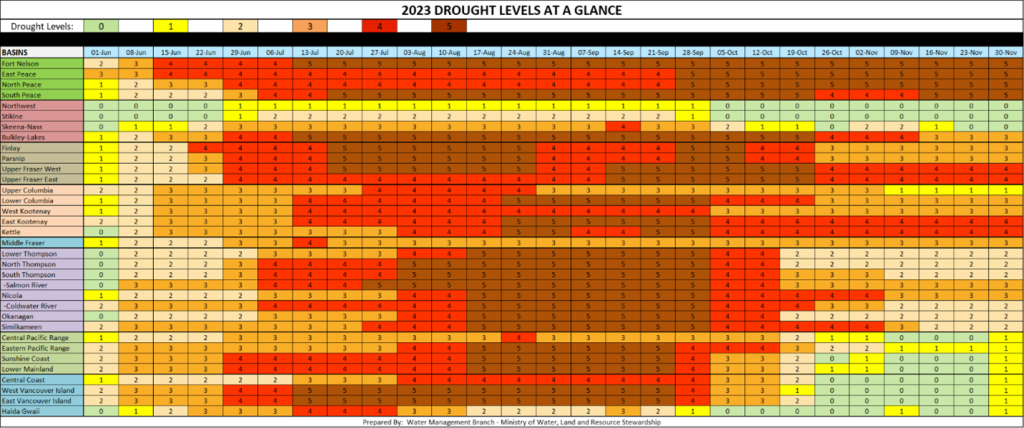
Answer from BC Hydro: In 2023, British Columbia experienced severe drought conditions. Drought levels in the Upper and Lower Columbia Basins ranged from drought levels 3 to 5 for the majority of the summer, which was similar to conditions across much of the province. For reference, please see Figure 2.
37. Provided the drought and all the catastrophes are real, why isn’t the pain shared across the border?? Why is it up to B.C. to suffer a drought and Washington state is business as usual?
Answer from the B.C. Columbia River Treaty Team: The Columbia River Treaty includes legal requirements that must be met unless the Treaty is terminated, or a modernized Treaty is in place. This includes the requirement B.C. has to provide a certain volume of water to the U.S. throughout the year for flood-risk management purposes and downstream hydropower generation. In addition, Canada (B.C.) is required to release more water during dry conditions in the U.S. to enable the U.S. to meet their firm energy requirements.
The Canadian negotiation delegation is strongly advocating for improvements in the Treaty, though its negotiations with the U.S., to help mitigate the type of impacts we’ve seen on Arrow Lakes Reservoir this year. Two key goals for the Canadian team are to gain more flexibility for how B.C.’s Treaty dams are operated, and to incorporate adaptive management into the Treaty, which will help both countries to adjust to the effects of climate change (including droughts and floods), evolving Indigenous and scientific knowledge, and other future unknowns.
38. Enough misuse of water by the US. As their desert land flourishes our land becomes desert land with frequent and unbearable dust storms. What will the new treaty bring for our area?
Answer from the B.C. Columbia River Treaty Team: The current Treaty requires B.C. to provide a certain volume of water to the United States throughout the year for flood-risk management purposes and downstream hydropower generation. Beyond that, both countries can use water for their own domestic purposes.
As Canada and the U.S. seek to modernize the Treaty, they are looking at different ways of managing the volume and timing of water releases to support a wider range of interests in both countries.
The Canadian negotiation delegation, which includes Canada, B.C. and the Ktunaxa, Secwépemc and Syilx Okanagan Nations, is strongly advocating for improvements to the Treaty that could reduce the types of impacts we’ve seen on Arrow Lakes Reservoir this year.
One of the priorities for the Canadian negotiating team is to gain increased flexibility for how B.C.’s Treaty dams are operated. The additional flexibility could allow B.C. to adjust operations to support ecosystems, Indigenous cultural values, and socio-economic interests in the B.C. Basin, without agreement from the U.S. There is significant research and river management scenario modelling underway that is informing how best to use any new flexibility. Part of this process includes looking at different elevations throughout the year on Arrow Lakes Reservoir. Research to determine objectives for the modelling process is being led by the Ktunaxa, Secwépemc, and Syilx Okanagan Nations in collaboration with federal and provincial governments, the Columbia River Treaty Local Governments Committee, and environmental non-governmental scientists and technical consultants.
The Canadian delegation is also aiming to incorporate adaptive management into the Treaty, allowing both countries to adjust to the effects of climate change (including droughts and floods), evolving Indigenous and scientific knowledge, and other future unknowns.
39. It seems to me that the U.S. is diverting water for irrigation from its reservoirs and expecting us to maintain their levels with added water (Arrow Lakes) for Hydro. Is anything being done to correct this?
Answer from the B.C. Columbia River Treaty Team: Under the Treaty, B.C. is required to send a certain volume of water to the U.S. throughout the year for flood risk management and power generation purposes only. Beyond that, both countries can use water for their own domestic purposes, which includes irrigation, so once the water crosses the border, the U.S. can determine how it’s used. Canada/B.C. is not required to maintain specific reservoir elevations south of the border, regardless of how the U.S. manages the water. Once B.C. releases the volume of water required under the Treaty, its obligations have been met.
As part of negotiations to modernize the Treaty, the Canadian and U.S. delegations are looking at different ways of managing the volume and timing of water releases to support a wider range of interests in both countries.
One of the priorities for the Canadian negotiating team is to gain increased flexibility for how B.C.’s Treaty dams are operated. The additional flexibility could allow B.C. to adjust operations to support ecosystems, Indigenous cultural values, and socio-economic interests in the B.C. Basin, without agreement from the U.S. There is significant research and river management scenario modelling underway that is informing how best to use any new flexibility. Part of that research includes looking at different elevations throughout the year on Arrow Lakes Reservoir. Research to determine objectives for the modelling process is being led by the Ktunaxa, Secwépemc, and Syilx Okanagan Nations in collaboration with federal and provincial governments, the Columbia River Treaty Local Governments Committee, and environmental non-governmental scientists and technical consultants.
The Canadian delegation is also aiming to incorporate adaptive management into the Treaty, allowing both countries to adjust to the effects of climate change (including droughts and floods), evolving Indigenous and scientific knowledge, and other future unknowns.
The Canadian Entitlement is half of the additional potential hydroelectric power that could be produced in the U.S. as a result of how B.C. operates its Treaty dams. It is calculated in advance using formulas included in the Treaty. The U.S. returns this power to Canada in the form of electricity at the Canada-U.S. border in B.C. Powerex, the marketing and trading subsidiary of BC Hydro, sells the Canadian Entitlement at market value to either BC Hydro or utilities in Alberta or United States. Revenues from the Canadian Entitlement are paid to the Province and go into its general revenue fund.
1. If the CRT requires 14.1-million-acre ft. of storage and BC Hydro has released over this amount since May 1, why is BC Hydro continuing to outflow more than the 5000 cubic ft per second as documented within the current treaty? Thank you.
Answer from BC Hydro: Under the terms of the Columbia River Treaty, BC Hydro is required to continue sending water to the U.S. during periods of dry conditions. BC Hydro did not send any more water than what is absolutely required to meet Treaty obligations, and this was managed and reviewed daily as part of water flow forecasts and operations planning.
Although the lowest possible release of water rate is 5,000 cubic feet per second (ft3/s), this does not mean this is all that BC Hydro is required to release. Discharges at 5,000 ft3/s would only be expected when the Treaty requires that more water is held in Canadian storage. A recent example is the week of February 10, 2024, when discharges from Arrow Lakes Reservoir were reduced to 5,000 ft3/s due to the atmospheric river event in the U.S., which resulted in significant inflows for the U.S. portion of the basin.
The 15 million-acre-feet of storage does not equate to discharges from the dams as the inflows to the reservoirs far exceeds the storage. The storage just provides some shaping of the flow releases. The annual average inflows into Kinbasket, Revelstoke, and Arrow are approximately 30 million-acre-feet.
2. Why is Hydro allowed to negotiate side deals?
Answer from BC Hydro: The Treaty Entities—BC Hydro, Bonneville Power Administration (BPA) and the U.S. Army Corps of Engineers (USACE)—periodically negotiate and sign supplemental operating agreements when there is mutual benefit to modify the water releases specified by the Columbia River Treaty. These supplemental operating agreements remain compliant within the Treaty. The ability to enter into these agreements is enabled by Columbia River Treaty.

3. Why was the drawdown so big this summer?
Answer from BC Hydro: The low levels observed in 2023 were due to a combination of below average snowpack during the winter of 2022/23, the early depletion or melt of the below average snow levels in May, and the following severe drought conditions observed in the Columbia basin. The combination of low inflows into the reservoir and required Columbia River Treaty discharges resulted in an exceptional deeper draft (lowering) of Arrow Lakes Reservoir over the summer and fall. Additionally, water releases from Kinbasket Reservoir that might otherwise keep Arrow Lakes Reservoir levels higher were managed, similar to prior low inflow years, to ensure sufficient water storage for winter energy supply for Revelstoke and Mica Generation Stations.
While last year’s Arrow Lakes Reservoir levels and drawdown caused a number of significant challenges, it’s important to note that the reservoir did operate as expected under the terms of the Columbia River Treaty and severe drought conditions. Should similar conditions occur in the future under the current Treaty, similar operations would be expected.
4. Am I correct in believing that any question involving BC Hydro, such as beach cleanup, boat launches, a bridge etc. are not going to be answered?
Answer from BC Hydro:
Reservoir clean up: In the fall/winter of 2023, BC Hydro undertook an inventory of the structures and materials that exist along the shores of Arrow Lakes Reservoir. This includes old building foundations, rusted metal, broken glass, and recent garbage. These structures and materials have now been assessed based on environmental considerations, archeological and heritage values, accessibility, and public safety concerns.
BC Hydro commenced work to start to remove some of these structures and materials in February of 2024. Work will take place over a four-week period, and efforts will be concentrated in high use areas that are easily accessible. Please note that in some areas, work can only be done by hand and without any excavation due to environmental considerations. Following this initial clean-up, BC Hydro will evaluate the remaining structures and materials for potential removal.
Boat launches: As part of BC Hydro’s water licence, they are required to provide access to Arrow Lakes Reservoir during the peak recreation season. To meet this requirement, BC Hydro completed construction and upgrades of boat ramps for use during the recreation period, which is generally considered to be from mid-June to mid-September. The Comptroller of Water Rights has confirmed that, subject to meeting maintenance requirements, BC Hydro has met their obligation to provide access to the reservoir.
Answer from the B.C. Columbia River Treaty Team:
Fauquier-Needles Bridge: The decision about building a bridge between Fauquier and Needles is the responsibility of the Ministry of Transportation and Infrastructure. The Ministry assessed the feasibility of building a bridge and decided not to pursue that option. This issue has been raised before, during the Province’s public engagement on the Columbia River Treaty, and residents have been divided on this issue. Some want a bridge and others do not, in order to prevent increased traffic through and to communities along Arrow Lakes. It’s important to note that the idea of a Fauquier-Needles bridge is not part of the Columbia River Treaty, or a condition of it. Those interested in pursuing this further can contact the Ministry of Transportation and Infrastructure.
Other questions: Any additional questions for BC Hydro can be directed to southern-interior.info@bchydro.com.
5. Please focus a bit on this years’ [2023] extreme drawdown reasons, thank-you.
Answer from BC Hydro: The low levels observed in 2023 were due to a combination of below average snow during the winter of 2022/23, the early depletion of the below average snowpack in May, and the following severe drought conditions observed in the Columbia basin. The combination of low inflows and required Columbia River Treaty discharges resulted in an exceptional deeper draft (lowering) of Arrow Lakes Reservoir over the summer and fall. Additionally, discharges from Kinbasket Reservoir that might otherwise keep Arrow Lakes Reservoir levels higher, were managed, similar to prior low inflow years, to ensure sufficient water storage for winter energy supply for Revelstoke and Mica Generation Stations.
6. I have a hard time believing that the levels have been this low ever at this time of year. In January, February and March yes, but not now….
Answer from BC Hydro: That is correct. Last year’s seasonal levels and rate of decline in August, September, and October have not been observed since the mid 1970s.
7. During the summer the Columbia River was higher than usual. Looking at water levels now the Grand Coulee is at 85% full, Arrow is Low, Duncan is down 1/3, and Kinbasket is near full. It appears that Arrow was drained to save water at Duncan and Kinbasket. Could there not have been a better sharing of water levels?
Answer from BC Hydro: All of the Columbia River Treaty basins operated below average in 2023. This includes Kinbasket, Arrow, and Duncan. Starting in August of 2023, BC Hydro increased flows from Duncan Reservoir in order to reduce flows from Arrow Lakes Reservoir. Water was also held in Kinbasket to meet the demand for power across the province during the winter months.
8. Why are Lake Roosevelt levels so high when Arrow Lakes Reservoir levels are so low?
Answer from BC Hydro: BC Hydro is obligated to release flows under the terms of the Columbia River Treaty. There is no provision for Canada to reduce flows under drought conditions, and they do not have the authority to hold back flows without agreement from their U.S. counterparts.
Once water flows across the border, the U.S. can manage it as they see fit. This includes energy purposes, fisheries, navigation, and many other downstream uses. The water that was held in Lake Roosevelt was used to meet U.S. domestic needs.
BC Hydro and the U.S. have, on occasion, found common ground to help meet objectives on both sides. For example, in May of 2023, flows from Arrow Lakes Reservoir were reduced because of mutual benefits with the U.S. to reduce peak flows in the U.S. and to support higher Arrow Lakes Reservoir levels in the spring. This agreement resulted in Arrow Lakes Reservoir levels being up to 8 feet higher than they would have otherwise been between May and August. The water was released by mid-August as per the agreement with the U.S. to meet U.S. fisheries objectives.
9. What is the minimum lake level for full power production at the Arrow Dam?
Answer from BC Hydro: Arrow Lakes Generating Station requires a minimum operating level between approximately 425.8 metres (1,397 feet) to 427.3 metres (1,402 feet). Arrow Lakes Generating Station contributes less than 1% of the total BC Hydro generation in an average year, and this generation is not a factor in the current reservoir levels.
10. What is the minimum level for the Arrow Lake (i.e. discharge rates would be reduced)?
Answer from BC Hydro: The normal licensed range for Arrow Lakes Reservoir is between 440.1 metres (1,444 feet) and 419.9 metres (1,377.9 feet). The reservoir can be operated up to two feet above its normal maximum level (to 440.7 metres or 1,446 feet) if approved by the Comptroller of Water Rights. Arrow Lakes Reservoir provides 7.1 million-acre-feet (MAF) of Treaty storage.
11. Is it correct to say you kept the water storage in Kinbasket for winter but released more water from Arrow Lakes to respect treaty requirements?
Answer from BC Hydro: Yes, water was being held in Kinbasket to ensure sufficient water storage to meet the demand for power across the province during the winter months. Additionally, because inflows were also below average into Kinbasket, there was also less water to release from Kinbasket.
12. Am I missing something? I thought we were concerned about water levels and what the committee is doing to correct the existing problem. The Arrow is located in Canada not Portland, Oregon. All the lakes and dams around us are full, so why can’t you adjust levels between them? Give us a straight answer.
Answer from BC Hydro: All of the Columbia River Treaty reservoirs operated below average in 2023. This includes Kinbasket, Arrow, and Duncan. Starting in August of 2023, BC Hydro increased flows from Duncan Reservoir in order to reduce flows from Arrow Lakes Reservoir. Water was held in Kinbasket Reservoir to meet the demand for power across the province during the winter months.
13. Why is Mercer Celgar penalized, fined, when they over-generate electricity by BC Hydro??? We could be getting MORE!
Answer from BC Hydro: As part of Government Phase 1 Comprehensive Review of BC Hydro, released in 2019, Government and BC Hydro worked together to develop a renewable organic material (biomass) energy strategy. This strategy included a Biomass Energy Program to address the expiry of the electricity purchase agreements for certain biomass facilities whose agreements were set to expire prior to 2022. Under the program, BC Hydro acquires energy from these eligible facilities through a combination of reduced power use (which is only available to BC Hydro customer generating facilities and which provides an incentive to these customers to offset part or all of their load) and energy purchases. The program includes a standard form of contract and set pricing.
Mercer Celgar’s biomass facility was one of the projects whose agreement was due to expire, and they executed a Biomass Energy Program electricity purchase agreement in 2020. As they are not a BC Hydro customer, and are connected to the FortisBC grid, their electricity purchase agreement only provides for energy purchases by BC Hydro.
Under the Mercer Celgar electricity purchase agreement, BC Hydro pays for electricity delivered to BC Hydro in accordance with the terms of that agreement. Consistent with the parameters of the Biomass Energy Program, there are penalties if Mercer Celgar fails to deliver electricity under certain circumstances, but there are no penalties for over-generating.
14. What was the natural average fluctuation of Arrow before the dam?
Answer from the B.C. Columbia River Treaty Team: Based on data from the Water Survey of Canada gauges that were operating prior to the construction of the Hugh L. Keenleyside Dam in 1968, the natural fluctuation of the Arrow Lakes ranged from approximately 1,377 feet (420 metres) up to early summer peaks between 1,393 feet (424.5 metres) and 1,409 feet (429.5 metres), for a fluctuation of up to 32 feet. This is illustrated in Figure 1.

15. Is the Arrow suffering due to the Peace taking its time to fill the Site C Reservoir?
Answer from BC Hydro: No, Site C Reservoir construction and fill is not related to the Arrow Lakes Reservoir levels observed in 2023. Last year’s low levels were due to a combination of below average snow during the winter of 2022/23, the early depletion of the below average level of snow in May, and the following severe drought conditions observed in the Columbia basin during the summer and fall. The combination of low inflows and amount of water we must release to the U.S. under the Columbia River Treaty resulted in a larger amount of water being released from Arrow Reservoir over the summer and fall of 2023. Additionally, water in Kinbasket Reservoir that might otherwise keep Arrow higher, was managed similar to prior low water years, to ensure sufficient water storage for winter energy supply for Revelstoke and Mica Generation Stations.
16. Why are watersheds not a part of Hydro’s infrastructure?
Answer from BC Hydro: BC Hydro’s water licences only extend to the storage of water in its reservoirs, not to the watersheds as a whole.
17. Is BC Hydro a Crown entity? Does the Ministry of Forests, Lands, Natural Resource Operations and Rural Development have any say in its management?
Answer from BC Hydro: BC Hydro is a provincial Crown corporation, owned by the government of British Columbia. BC Hydro reports directly to the Minister of Energy, Mines, and Low Carbon Innovation.
18. With the extreme water discharge this year since June 23rd, no real answer has been given as to why it was released so quickly and without any warning to residents, other than the weekly report. This has caused extreme hardship to properties. Transparency is required to prepare for this loss of water (at lakefront homes and properties) What is being done to ensure that we have available water for our homes in the future? We have a 1.5 km distance to the lakeshore.
Answer from BC Hydro: BC Hydro provides information on their operations in the Columbia basin in a number of ways, including:
- weekly operations updates that are sent via email,
- a toll-free information line that provides up-to-date reservoir level and river flow information,
- biannual operations summaries that are published every spring and fall,
- near real-time reservoir level information on bchydro.com,
- annual operations update meetings that are held every spring, and
- responding to requests for information via phone, email, and in-person.
In addition to the regular information BC Hydro provides about their Columbia basin operations, they also enhance their regular communications during periods of unusual operations, such as during the drought conditions observed in 2023. Last summer BC Hydro issued two supplementary advisories explaining the low Arrow Lakes Reservoir levels and advising on the forecast. The second advisory was accompanied by a background document that provided an overview on Arrow Lakes Reservoir operations, the Columbia River Treaty, and the Columbia basin. They also hosted virtual public meetings for local elected officials as well as a public virtual meeting. They have also responded to a high volume of questions and concerns via phone calls, emails, and in-person conversations.
19. There wasn’t really any clear explanation as to how there were lower levels above Mica and that the outflows from Mica were the major contributing factor to the Arrow’s rapid and low drawdown. A comparison of the differences this year as compared to previous low water years would have made it lot easier to explain the reason why we are where we are this year.
Answer from BC Hydro: At the end of October 2023, Kinbasket Reservoir was approximately 7.5 metres (25 feet) higher than it was at the same time in 2001, a comparable dry year for the Canadian basin. In 2001, the water was released from Kinbasket to support Arrow Lakes Reservoir levels. In 2023, however, the water was held in storage to ensure that we could meet winter generation requirements due to province-wide drought conditions.
Mica Dam, which creates Kinbasket Reservoir, and Revelstoke Dam, which creates Revelstoke Reservoir, provide over 27% of BC Hydro’s integrated energy. These dams are managed to provide sufficient energy generation across the winter. While Arrow Lakes Reservoir does not have a BC Hydro generation station, the Arrow Lakes Generating Station, owned by Columbia Power, provides less than 1% of BC Hydro’s total generation.
20. However, when most other lakes in the region are still full or near full and the Arrow Lakes are empty, the main reason for the low water level is not drought.
Answer from BC Hydro: Most natural lakes and BC Hydro reservoirs were also below average during the summer of 2023. This was not unexpected given the province-wide drought conditions. The below normal seasonal levels were expected following a lower level of snowpack in the spring, and subsequent below average precipitation observed in many basins. All of the Columbia River Treaty reservoirs operated below average in 2023. This includes Kinbasket, Arrow, and Duncan.
21. BC Hydro’s presentation confirmed the level was about maximizing profits. Does BC Hydro not have agreements to buy power from other sources?
Answer from BC Hydro: Arrow Lakes Reservoir levels observed in 2023 were a result of the regional and provincial drought, compliance with the Columbia River Treaty, and upstream operations at Kinbasket for winter energy reliability. Arrow Lakes Reservoir levels were not an outcome of maximizing profits. BC Hydro operates its integrated system under required licence and Treaty obligations, including Water Use Plan objectives, in consideration of providing reliable energy and minimizing costs to our ratepayers.
For further clarification, the Arrow Lakes Reservoir levels in 2023 were in no way driven by profit. Arrow Lakes Reservoir was managed to keep levels as high as possible and to ensure that Kinbasket Reservoir, upstream, has sufficient water storage for the winter to ensure BC Hydro could meet load requirements across the winter. BC Hydro has not been exporting power at the expense of Arrow Lakes Reservoir elevations. There have been net imports into the BC Hydro system starting in January 2023 due to the ongoing drought.
BC Hydro does have about 130 Electricity Purchase Agreements with independent power producers and the energy from these agreements is included in BC Hydro’s plans for the winter.
22. If BC Hydro is so concerned about having enough power, why are BC Hydro and the BC government pushing so hard for everyone to switch to electric heat and electric vehicles?
Answer from BC Hydro: The growing transition to clean energy is a key pathway to achieving BC Hydro’s CleanBC emission reduction targets – and there is significant interest from the residential, commercial, transportation and industrial sectors in making the switch from using fossil fuels to clean electricity. As a result, electricity demand is forecast to increase by 15% or more by 2030.
To meet the growing demand, BC Hydro is adding Site C next year, which will add 8% to the current supply and provide enough clean electricity to power half a million homes or 1.7 million electric vehicles per year.
Government and BC Hydro have also partnered to launch a competitive call for power this spring to acquire 3,000 gigawatt hours per year of clean and renewable electricity, like wind and solar – the equivalent of powering 270,000 homes or adding 5% per cent our current supply. New projects will begin generation as early as 2028, and the call for power is expected to be the first in a series of calls in the coming years.
Additional actions BC Hydro is taking to meet the growing demand include accelerating or extending the timing of several of the existing near-term actions, including actions on energy efficiency, demand response, industrial load curtailment, electricity purchase agreement renewals, and utility-scale batteries.
BC Hydro is also now embarking on the next significant step forward – the release of their 10-Year Capital Plan containing $36 billion in community and regional infrastructure investments across the B.C. This new plan represents an increase of about 50 per cent in investments over the previous capital plans and reflects the province’s growing demand for electricity over time from residential, commercial, transportation and industrial sectors. The plan proposes spending approximately $9.4 billion on electrification and greenhouse gas reduction, $5.3 billion to address load growth and increased customer connections, and $21 billion to sustain existing capital assets, dam safety and reliability.
23. Is there a separate (non-treaty) agreement with the U.S. to provide additional water beyond the treaty requirements?
Answer from BC Hydro: BC Hydro’s operations in the Columbia Basin are governed by the terms of the Columbia River Treaty. The Columbia River Treaty requires Canada to hold back water during wet years and release more water during dry years. BC Hydro is legally required to release this water to the U.S., no more or less, except by agreement with the U.S.
Mica Dam has 12 million acre-feet (MAF) of live reservoir storage of which only 7 MAF is coordinated under the Columbia River Treaty. The Non-Treaty Storage Agreement (NTSA) coordinates the use of 5 MAF of storage with Bonneville Power Administration (BPA). The NTSA is implemented by altering the release and storage of water from Arrow by mutual agreement. This allows the parties to increase or decrease discharges across the U.S./Canada border in addition to those required by the Columbia River Treaty.
The NTSA provides BC Hydro more control over reservoir levels. Since the agreement was signed, BC Hydro and BPA have made good use of NTSA flexibility to reduce high and low water impacts downstream of Arrow Lakes Reservoir and to improve power and non-power benefits for both countries.
The severe drought conditions observed in 2023, combined with Columbia River Treaty requirements, resulted in very low levels on Arrow Lakes Reservoir during the second half of the summer and into the fall. In order to minimize impacts to Arrow Lakes Reservoir levels, BC Hydro utilized storage under NTSA in May during the peak of spring run-off to reduce Treaty releases from Arrow Lakes Reservoir to support higher Arrow levels. This operation resulted in the reservoir being up to 2.4 metres (8 feet) higher from May through August. The water was released by mid-August as per the agreement with the U.S. to meet U.S. fisheries objectives.
Province of B.C. Columbia River Treaty Team columbiarivertreaty@gov.bc.ca | website
BC Hydro southern-interior.info@bchydro.com | website
To receive updates on the Columbia River Treaty, subscribe to the B.C. Columbia River Treaty newsletter and follow the B.C. Columbia River Treaty on Facebook and Twitter/X, all of which share information on developments in Treaty negotiations and future engagement opportunities. Updates are also posted on the B.C. Columbia River Treaty website. Recordings and materials from past public information sessions can be found on the Information Sessions page of the site.
To receive updates on BC Hydro reservoir elevations and other information related to Columbia River hydro operations, email southern-interior.info@bchydro.com and indicate whether you would like to receive updates on Upper Columbia operations (including Kinbasket and Arrow Lakes Reservoirs, and Revelstoke Dam) and/or Lower Columbia operations (including Arrow Lakes and Duncan Reservoirs, and Kootenay Lake.)
To learn more about the Columbia River Treaty Local Governments Committee, visit their website. Questions for the committee can be emailed to info@crtlgc.ca.
An online survey was issued to attendees after the session and 30 responses were received. The following comments are representative of the range of feedback received:
- There needs to be more public engagement to reduce disenfranchisement of Arrow Lake residents.
- Good and very informational. Appreciated the diversity of content.
- Some information was too technical for a general audience.
- BC Hydro was well represented in the session with facts and knowledge.
- Spend more time on answering questions and less time on reviewing background information.
- A comparison of previous low water years would help put this year’s levels in context.
- This time, felt like concerns were being seriously considered.
- The depth of representation was good. Need to acknowledge the many issues that residents of Arrow Lakes are facing and detail specific follow up actions.
- Appreciate the passion of the Columbia River Treaty negotiating team and the adjusted focus on environmental and ecosystem issues. They need to be firm in holding their ground on these issues.
- Help residents make the connection between the impacts they are seeing and the obligations of the Treaty.
- Now understand why water hasn’t been released into Arrow to maintain levels.
- Develop more simple visuals to explain how, when and why water moves between reservoirs.
- Hold more regular update sessions like this.
- Allow questions to be submitted in advance, and answered in simple, bulleted, single slides.
BC Hydro is the Canadian Entity responsible for the implementation of the Columbia River Treaty and the operator of the Columbia River Treaty dams in Canada.
BC Hydro is working closely with the Ministry of Energy and Mines Columbia River Treaty Review Team and is providing technical support to the Columbia River Treaty review process.
First Nation consultation is a key component of the Columbia River Treaty Review and was a separate government-to-government consultation process with each First Nation. The Province is continuing to engage with First Nations on the future of the Treaty.
Canada and BC have signed an Memorandum of Understanding to coordinate Aboriginal consultations as part of the Review. This consultation process helped inform Canada and BC’s recommendations to decision makers.
24. Could have provided more clarification about why the current terms that result in low lake levels cannot be changed yet (explanation of negotiation process). People may not have made the connection between the impacts they see in person and the obligations of the Treaty.
Answer from the B.C. Columbia River Treaty Team: The Columbia River Treaty is a legally binding, international agreement between Canada and the United States. Under the current Columbia River Treaty, Canada (B.C.) is required to provide a certain volume of water to the U.S. throughout the year for flood-risk management purposes and downstream hydropower generation. This last requirement is the factor that contributed to the severe drafting on Arrow Lakes Reservoir this year. Canada is required to release more water during dry conditions in the U.S. to enable the U.S. to meet their firm energy requirements.
As Canada and the U.S. seek to negotiate a modernized Treaty, Canada, B.C. and the Ktunaxa, Secwépemc and Syilx Okanagan Nations are strongly advocating for improvements in the Treaty that would reduce the type of impacts seen on Arrow Lakes Reservoir last year. The Canadian and U.S. negotiating teams are looking at different ways of managing the volume and timing of water releases to support a wide range of interests in both countries.
One of the key goals for the Canadian negotiating team is to gain more flexibility for how B.C. operates its Treaty dams. The additional flexibility would allow B.C. to adjust operations to support ecosystems (including fish), Indigenous cultural values, and socio-economic interests, such as recreation and tourism, without agreement from the U.S. There is significant research and river management scenario modelling underway that is informing how best to use any new flexibility. Part of that research includes looking at different elevations throughout the year on Arrow Lakes Reservoir. Research to determine objectives for the modelling process is being led by the Ktunaxa, Secwépemc and Syilx Okanagan Nations in collaboration with federal and provincial governments, the Columbia River Treaty Local Governments Committee, and environmental non-governmental scientists and technical consultants.
The Canadian delegation is also seeking to incorporate adaptive management into the Treaty, allowing both countries to adjust to the effects of climate change (including droughts and floods), evolving Indigenous and scientific knowledge, and other future unknowns.
However, until a modernized Columbia River Treaty is in place, B.C. must continue to meet its legal requirements under the current Treaty.
25. What is the annual financial intake to the BC government regarding the Columbia River Treaty? Also, what is the projected financial contribution from this year’s water discharge?
Answer from the B.C. Columbia River Treaty Team: Revenue from the sale of the downstream power benefits, also known as the Canadian Entitlement, has generated an average of between $150 and $200 million per year. In fiscal year 2022/23, because of high market prices in the U.S., the total was $437 million.
The Canadian Entitlement is half of the additional potential hydroelectric power that could be produced in the U.S. as a result of how B.C. operates its Treaty dams. It is calculated in advance using formulas included in the Treaty. The U.S. returns this power to Canada in the form of electricity at the Canada-U.S. border. Powerex, the marketing and trading subsidiary of BC Hydro, sells the Canadian Entitlement at market value to either BC Hydro or utilities in the United States.
Total annual revenue is paid to the Province’s Consolidated Revenue Fund and depends on the price of power on the market. The Canadian Entitlement’s financial contribution to the Province will only be known at fiscal year-end, that is after March 31, 2024. Then the information is made public every year.
26. What about the water that the U.S. uses that is not used for power? What is being paid for that water, that we can’t have?
Answer from the B.C. Columbia River Treaty Team: The current Treaty includes provisions for power generation and flood risk management only. Outside of these provisions, both Canada and the U.S. can use water on their side of the border for domestic purposes. If the U.S. doesn’t use the Treaty flows for power, they still need to deliver the Canadian Entitlement.
27. Does the Site C Dam have any impact on the future water management of the CRT?
Answer from BC Hydro: Site C will not have an impact on BC Hydro’s obligations under the Columbia River Treaty. Once Site C is operational, it will provide BC Hydro with a new resource to meet its growing load. It may, at times, provide additional flexibility to help manage unusual conditions across BC Hydro’s system.
28. does the Treaty require Canada to send water to the U.S. during dry periods and not keep it here?
Answer from BC Hydro: The Columbia River Treaty is operated for power generation and flood control objectives. Under the terms of the Treaty, Canada is required to release more water during dry conditions in the U.S. to enable the U.S. to meet their firm energy requirements. There is no provision for Canada to reduce flows under drought conditions.
BC Hydro’s obligation is to operate the Columbia system under the terms of the Columbia River Treaty. Although BC Hydro can take steps to minimize impacts, such as holding back flows last spring, they cannot prevent low levels due to drought conditions.
29. I would like to see the Treaty language and numbers that direct BC to send more water to the U.S. during dry conditions. Is it by water levels, temp, etc.? The August drawdown was somewhat extreme…
Can you please define the section of the current CRT which states BC Hydro needs to release MORE water to the U.S.A. during dry conditions as Darren Sherbot stated in his presentation? Thank you.
Answer from BC Hydro: The Columbia River Treaty is operated for power generation and flood control objectives. Under the terms of the Treaty, Canada is required to release more water during dry conditions in the U.S. to enable the U.S. to meet their firm energy requirements for load. BC Hydro is legally required to release this water to the U.S., no more or less, except by agreement with the U.S.
A general overview of obligations can be found in the Columbia River Treaty 2014/2020 Review (July 2010) at Phase-1-Report-Appendices-July-2010.pdf (gov.bc.ca). For specific references to Proportional Draft see A-26.
30. Why are we required to release more water the dryer it is?
One statement made but not fully explained was that in dryer conditions Hydro is forced to send MORE water to the USA. Why?
Answer from BC Hydro: The Columbia River Treaty is operated for power generation and flood control objectives. Under the terms of the Treaty, BC Hydro is required to release more water to the U.S. during dry conditions to meet U.S. power objectives. Because Arrow Lakes Reservoir has no significant power generation (less than 1% of BC Hydro’s total generation) it is drafted before the other reservoirs.
31. So the lower mainland gets all our water for power? No that does not help.
Answer from BC Hydro: BC Hydro operates its integrated system, which includes all the province (not just the Lower Mainland), under required licence and Treaty obligations, including Water Use Plan objectives, in consideration of providing reliable energy and minimizing costs to ratepayers.
For further clarification, while there is a small generating station adjacent to the Hugh L. Keenleyside Dam, water released from Arrow Lakes Reservoir via the Arrow Lakes Generating Station does not contribute a significant amount of power to the integrated system (less than 1% of BC Hydro’s total generation). All the major generation is upstream at Mica Generating Station and Revelstoke Generating Station. Water released from Arrow Lakes Reservoir is to meet the terms of the Columbia River Treaty, not for power generation.
40. Is there an additional and separate agreement in addition to the Treaty Agreement between Canada and the U.S. to provide water to the U.S.? If so, given the drought and global warming how long does this agreement extend and do we need to renew this agreement when it comes up for renewal?
Answer from BC Hydro: BC Hydro’s operations in the Columbia Basin are governed by the terms of the Columbia River Treaty. The Columbia River Treaty requires Canada to hold back water during wet years and release more water during dry years. BC Hydro is legally required to release this water to the U.S., no more or less, except by agreement with the U.S.
Mica Dam has 12 million acre-feet (MAF) of live water storage of which only 7 MAF is coordinated under the Columbia River Treaty. The Non-Treaty Storage Agreement (NTSA) coordinates the use of 5 MAF of storage with Bonneville Power Administration (BPA). The NTSA is implemented by altering the release and storage of water from Arrow by mutual agreement. This allows the parties to increase or decrease water releases across the U.S./Canada border in addition to those required by the Columbia River Treaty.
The current NTSA was signed by BC Hydro and Bonneville Power Administration (BPA) in 2012 and remains in effect until 2024. The NTSA provides BC Hydro more control over reservoir levels, more energy benefits to B.C., and more operating flexibility to balance competing non-power interests on the Columbia system. These interests include recreational activities, wildlife habitat, and fisheries. Since the agreement was signed, BC Hydro and BPA have made good use of NTSA flexibility to reduce high and low water impacts downstream of Arrow Lakes Reservoir and to improve power and non-power benefits for both countries.
Last year’s severe drought conditions, combined with Columbia River Treaty requirements, resulted in very low levels on the Arrow Lakes Reservoir during the second half of the summer and into the fall. In order to minimize impacts to Arrow Lakes Reservoir levels, BC Hydro used storage under NTSA in May during the peak of spring water runoff to reduce Treaty releases from Arrow Lakes Reservoir in order to support higher Arrow levels. This operation resulted in the reservoir being 2.4 metres (8 feet) higher from May through August. The water was released by mid-August as per the agreement with the U.S. to meet U.S. fisheries objectives.
41. Will the next Treaty include a provision to reduce outflows from Arrow Lake during droughts? It seems this is a serious oversight in the current Treaty.
Answer from the B.C. Columbia River Treaty Team: Though the specifics of negotiations are confidential, it can be shared that the Canadian and U.S. negotiating teams are looking at different ways of managing the volume and timing of water releases to support a wider range of interests in both countries.
One of the priorities for the Canadian team is to gain increased flexibility for how B.C.’s Treaty dams are operated, including the Hugh L. Keenleyside dam. The additional flexibility would allow to adjust operations to support ecosystems (including fish), Indigenous cultural values, and socio-economic interests, such as recreation and tourism, without agreement from the U.S. There is significant research and river management scenario modelling underway that is informing how best to use any new flexibility. Part of that process includes looking at different elevations throughout the year on Arrow Lakes Reservoir. Research to determine objectives for the modelling process is being led by the Ktunaxa, Secwépemc and Syilx Okanagan Nations in collaboration with federal and provincial governments, the Columbia River Treaty Local Governments Committee, and environmental non-governmental scientists and technical consultants.
The Canadian delegation is also aiming to incorporate adaptive management into the Treaty, allowing both countries to adjust to the effects of climate change (including droughts and floods), evolving Indigenous and scientific knowledge, and other future unknowns.
42. So regardless of our situation, drought etc., we have to send the water? We have no out?
Answer from the B.C. Columbia River Treaty Team: Until a modernized Columbia River Treaty is in place, Canada must continue to meet its legal Treaty obligations, which include releasing a certain volume to the U.S. throughout the year for flood risk management and power generation purposes, including during times of drought.
Canada, B.C. and the Ktunaxa, Secwépemc and Syilx Okanagan Nations are strongly advocating for improvements to the Columbia River Treaty to reduce the types of impacts seen on Arrow Lakes last year.
One of the priorities for the Canadian team is to gain increased flexibility for how B.C.’s Treaty dams are operated, including the Hugh L. Keenleyside dam. The additional flexibility will allow B.C. to adjust operations to support ecosystems (including fish), Indigenous cultural values, and socio-economic interests, such as recreation and tourism, without agreement from the U.S.
There is significant research and river management scenario modelling underway that is informing how best to use any new flexibility. Part of that process includes looking at different elevations throughout the year on Arrow Lakes Reservoir. Research to determine objectives for the modelling process is being led by the Ktunaxa, Secwépemc and Syilx Okanagan Nations in collaboration with federal and provincial governments, the Columbia River Treaty Local Governments Committee, and environmental non-governmental scientists and technical consultants.
The Canadian delegation is also aiming to incorporate adaptive management into the Treaty, allowing both countries to adjust to the effects of climate change (including droughts and floods), evolving Indigenous and scientific knowledge, and other future unknowns.
43. The drought conversation is good and for future but that does not answer why Kootenay Lake levels going through Keenleyside were not nearly as affected as Arrow lakes. That does not fly, please answer that question.
Answer from BC Hydro: Kootenay Lake is part of the Kootenay system, not the Columbia system, and discharges downstream of the Hugh L. Keenleyside Dam and Arrow Lakes Reservoir. Its levels are not controlled or affected by the Hugh L. Keenleyside Dam. The water licence for Arrow Lakes Reservoir allows for operations between 440.1 metres (1,444 feet) and 419.9 metres (1,377.9 feet). The reservoir can be operated up to two feet above its normal maximum level (to 440.7 metres or 1,446 feet) if approved by the Comptroller of Water Rights. In comparison, Kootenay Lake can only fluctuate between 529.7 metres (1,738 feet) and 534 metres (1,752 feet).
44. How bad was the drought in Washington and Oregon?
Answer from BC Hydro: The U.S. also experienced similar dry conditions in the fall/winter of 2023 and below normal snow accumulation. The 2023 precipitation for the Columbia basin above The Dalles, Oregon in the lower Columbia was 87% of normal.
45. Comment from Information Session participant: Early snowmelt, a lack of spring rain, and low stream flows prompted Ecology to declare a drought emergency for 12 watersheds in parts of 12 counties. The information below is for water system managers. For general public, visit Ecology’s 2023 Drought in Washington page.
Response from the B.C. Columbia River Treaty Team: Thank you for sharing this information with all concerned.
46. What more can be done in the face of drought and impending extreme drought? Are there reservoir storage capacity options capable of mitigating risk?
Answer from the B.C. Columbia River Treaty Team: Modernizing the Treaty to include more flexibility for B.C. Treaty dam operations and incorporate adaptive management will help mitigate the impacts of future droughts.
The additional flexibility could allow B.C. to adjust its Treaty dam operations to support ecosystems (including fish), Indigenous cultural values, and socio-economic interests, such as recreation and tourism, without agreement from the U.S. There is significant research and river management scenario modelling underway that is informing how best to use any new flexibility. Part of that process includes looking at different elevations throughout the year on Arrow Lakes Reservoir. Research to determine objectives for the modelling process is being led by the Ktunaxa, Secwépemc and Syilx Okanagan Nations in collaboration with federal and provincial governments, the Columbia River Treaty Local Governments Committee, and environmental non-governmental scientists and technical consultants. Climate change projections are informing this modelling work.
Incorporating adaptive management into the Treaty will allow both countries to adjust to the effects of climate change (including droughts and floods), evolving Indigenous and scientific knowledge, and other future unknowns.
These are two key goals the Canadian negotiating team is working towards including in a modernized Treaty.
There is no plan to increase Columbia River Treaty dam heights to increase storage capacity.
47. Who initiated the opening of the Treaty for negotiation, Canada or the U.S.?
Answer from the B.C. Columbia River Treaty Team: The Canada and United States governments jointly decided to enter into negotiations to modernize the Treaty in May 2018. This decision came after frequent communication between Global Affairs Canada, the Province of B.C. and the U.S. Department of State to ensure both countries were in a position to begin negotiating.
48. Why are the Treaty negotiations confidential?
Why are negotiations classified?
Answer from the B.C. Columbia River Treaty Team: Details of negotiations are kept confidential because sharing specifics could compromise either country’s negotiating positions. From the Canadian negotiating team’s perspective, it could affect their ability to secure a modernized Treaty that represents the interests of B.C., Columbia Basin Indigenous Nations and residents. Confidentiality also assists both sides in freely exploring options for modernizing the Treaty, some of which are pursued, some of which are not.
However, there is information about the negotiations that can and is being shared to ensure people in the Basin are kept up to date and understand what is being discussed. The Province of B.C. Columbia River Treaty Team has been engaging with Indigenous Nations, local governments, and residents since 2012 to learn what Treaty-related issues matter to them. The B.C. Treaty team connects with people through in-person and virtual public meetings, social media, emails, phone calls, and letters. Members of the Canadian negotiating team, including Canada’s Lead Negotiator and representatives from the Province of B.C. and Basin Indigenous Nations, attend the public meetings to share updates, answer questions and hear from residents firsthand.
In addition, there are two committees the Canadian negotiating team updates after each round of negotiations – the Columbia River Treaty Local Governments Committee and the Columbia Basin Regional Advisory Committee. These groups consist of members from across the Basin and are providing suggestions and advice on what an improved Treaty could look like.
Recordings of virtual sessions and reports from past community engagement meetings are available on the Province of B.C. website. The latest news about negotiations is also shared regularly through the B.C. Columbia River Treaty website, Facebook, Twitter/X, newsletters and media releases.
Before any agreement on a modernized Columbia River Treaty is finalized, the Province will return to the Basin to explain what is being proposed and seek feedback, so residents can see how their input is reflected.
49. If there are not elected officials on the board, why would resident input be of any value?
Answer from the B.C. Columbia River Treaty Team: While there are no elected officials at the Columbia River Treaty negotiating table, the Provincial Government has committed to making sure Basin Indigenous Nations and residents’ interests are reflected in a modernized Treaty. This commitment was made by the Liberal government in 2011 and re-confirmed by the NDP government when they took office in 2017. Global Affairs Canada, as the lead for international treaties, has supported this commitment. As such, Basin Indigenous Nations and resident interests have directly informed what the Canadian negotiation delegation is seeking in its negotiations with the U.S. to modernize the Treaty.
The Province of B.C. Columbia River Treaty team has been engaging with Indigenous Nations, local governments and residents since 2012 to learn what changes they would like to see in a modernized Treaty. The B.C. Treaty team connects with people through in-person and virtual public meetings, social media, emails, phone calls, and letters. Members of the Canadian negotiating team, including Canada’s Lead Negotiator and representatives from the Province of B.C. and Basin Indigenous Nations, attend the public meetings to share updates, answer questions and hear from residents firsthand. The B.C. Treaty Team has also received regular input from the Columbia River Treaty Local Governments Committee and the Columbia Basin Regional Advisory Committee – two groups with representatives from impacted areas across the Basin. Recordings of virtual sessions and reports from past community engagement meetings are available on the Province of B.C. website.
Input received through this process has been guiding the Canadian negotiation delegation’s efforts to ensure a modernized Treaty: supports ecosystem health, salmon restoration, Indigenous cultural values, and social and economic interests; is able to adapt to future unknowns, like the effects of climate change; and continues to protect communities from damaging floods and enable generation of clean hydroelectricity. Before any agreement is finalized, the Province will return to the Basin to explain what is being proposed and seek feedback.
50. But Minister Conroy has stated that she has no power to affect negotiations?
Answer from the B.C. Columbia River Treaty Team: While Minister Conroy is not at the negotiating table, she is responsible for ensuring that B.C.’s interests are represented as part of the negotiations. The Minister is briefed regularly on the progress of negotiations by the B.C. Treaty Team and provides feedback and advice. She is also in frequent contact with federal and First Nations leaders to discuss what needs to change. She will lead the review of any agreement-in-principle at the provincial Cabinet table.
51. Once the Treaty is signed, how long for ratification?
Answer from the B.C. Columbia River Treaty Team: The timeline is to be determined. Once an agreement-in-principle for a modernized Treaty is reached at the negotiating table, there are different processes in both countries that will take place. In B.C., this includes engaging with Basin Indigenous Nations, local governments and residents to explain what the agreement-in-principle includes and seek feedback. Legal drafting of Treaty text will also be underway. There are also processes that will happen within the B.C. government, as well as Canadian and U.S. federal governments. The mechanism to ratify a modernized Treaty will depend on the scope and extent of proposed changes to the current agreement. In Canada, changes to the Treaty can be approved by the executive branch of the federal government after debate in parliament.
52. Can you elaborate on the hard points in negotiations with what the U.S. wants that will hurt us the most?
Answer from the B.C. Columbia River Treaty Team: Specific negotiating points from either country cannot be shared due to negotiations confidentiality. However, what can be shared is that the U.S. is seeking certainty around flood risk management to continue to be able to rely on Canada’s help to avoid or reduce damaging floods, as has been the case for the last 60 years. The U.S. also wishes to maintain reliable predictable firm electricity generation that is amplified by Treaty power coordination. Much of the bilateral discussions involve salmon, including reintroduction of salmon into the Canadian basin.
Both countries may perceive the value of these Treaty benefits differently which is part of the ongoing negotiations.
53. What happens if our governments cannot come to reasonable terms on the Treaty? Can we be assured that the treaty will not be signed unless it is in the best interest of Canada?
How militant…what are our options… if the U.S. doesn’t want to meet our demands?
Answer from the B.C. Columbia River Treaty Team: If Canada and the U.S cannot reach agreement on a modernized Treaty, the Treaty continues in its current form, except for the Flood Risk Management provisions which expire in fall of 2024. In addition, either country can issue a 10-year termination notice.
Canada, B.C. and the Ktunaxa, Secwépemc and Syilx Okanagan Nations have been clear with the U.S. that a modernized Treaty must reduce the impacts B.C. Basin communities and ecosystems have been experiencing since the Treaty came into force. The Canadian negotiation delegation’s proposals for a modernized Treaty reflect this, and the delegation won’t support an agreement unless it leads to fewer impacts in the B.C. Basin.
54. Conversation is heard that the U.S.A. wants to eliminate Canadian entitlement. If so, what is Canada’s alternative to make up this revenue/power shortfall?
Answer from the B.C. Columbia River Treaty Team: The U.S. is seeking to “rebalance” the Canadian Entitlement at the negotiation table and Canada is seeking a fair and equitable share of the Treaty benefits, including the Canadian Entitlement. Further details of the negotiations are confidential until an agreement-in-principle is reached, which will be shared with Basin residents.
55. Once a Treaty is in place how can we change it after? Isn’t it the time to make changes before the Treaty is reached?
Answer from the B.C. Columbia River Treaty Team: The Treaty can be changed at any time as long as there is mutual agreement between countries. In addition, the Canadian negotiating team is seeking to incorporate adaptive management into a modernized Treaty, allowing both countries to adjust to new information and future unknowns, such as the effects of climate change (including droughts and floods), evolving Indigenous and scientific knowledge, and technological advancements.
Further to this, B.C. is seeking greater flexibility in order to be able to make changes in the Canadian portion of the Columbia Basin even once a modernized Treaty is in place.
56. What are the consequences if Canada or U.S. decided to break the Treaty? How long does it take for that to happen?
Answer from the B.C. Columbia River Treaty Team: Each country is required under international law to meet its requirements under the Treaty. Either country can terminate the Treaty with 10 years notice if it does not wish to continue.
57. Dear heart, you’ve been talking for 10 years, negotiating for 5 years and here we sit. Could we get someone to the table capable of actually addressing the issues we face? Flood control, here’s hoping.
Answer from the B.C. Columbia River Treaty Team: Negotiations have taken time because there are many interests to consider. Both countries are taking the time they time to improve on a 60-year-old Treaty in high need of renewal. Each delegation is negotiating hard to ensure that a modernized Treaty will satisfactorily meet both country’s interests so that it will endure. An expedited agreement may not be the best for B.C.
For the Canadian negotiation delegation, that means modernizing the Treaty to reflect the interests of Basin Indigenous Nations, local governments and residents. Through technical studies, river management modelling, partnership with Indigenous Nations, and engagement with Basin local governments and residents, the delegation is exploring how a modernized Treaty can support ecosystem health, salmon restoration, Indigenous cultural values, and social and economic interests, while continuing to protect communities from damaging floods and enable generation of clean hydroelectricity to power homes and businesses. Before any agreement is finalized, the Province of B.C. Treaty team will engage with the people of the Basin to explain what is being proposed and seek feedback.
58. Who decided that the Treaty cannot be cancelled? At many meetings the residents asked why, and years later we still do not have an answer.
And another asked what if the U.S does not to play ball and when you say can’t change immediately, do you mean this round for 2024, or another 25 years?
Answer from the B.C. Columbia River Treaty Team: If Canada and the U.S cannot reach agreement on a modernized Treaty, the Treaty continues in its present for except for the Flood Risk Management provisions which expire in fall 2024. Either country can terminate the Treaty at any time, with 10 years notice.
59. Why would the U.S. give up their very lucrative deal? What are you offering the U.S. to get them to give up their enviable deal?
Answer from the B.C. Columbia River Treaty Team: Though the details of negotiations are confidential, what can be shared is that both countries currently see value in modernizing the Treaty, which is why negotiations are underway instead of letting the Treaty continue as is or terminating it. These negotiations provide an opportunity for both countries to update the Treaty in a way that reflects the values and interests of today – to incorporate ecosystems, salmon reintroduction and adaptive management, update flood risk management and hydro power provisions, and discuss compensation that reflects a fair and equitable sharing of benefits.
Both countries may perceive the value of these Treaty benefits differently which is part of the ongoing negotiations.
60. Thank-you for your individual presentations. When and where will the next formal round of CRT negotiations take place?
Answer from the B.C. Columbia River Treaty Team: The next round of negotiations has not been scheduled. The Canadian and U.S. teams are holding virtual intersessional meetings to work through outstanding issues.
61. How concerned is the current negotiating committee with the potential return of a Republican-led government in 2024 that may discount climate change or only be looking for ‘the best deal’ for the U.S.A.?
Answer from the B.C. Columbia River Treaty Team: Canada is negotiating with the current U.S. administration. The course of negotiations to modernize the Treaty have not changed throughout the last three U.S. administrations.
62. Are you able to convey to the audience some of the concerns your American counterparts have?
Answer from the B.C. Columbia River Treaty Team: While the details of negotiations are confidential, what can be shared is that the U.S. is seeking certainty around flood risk management to continue to be able to rely on Canada’s help to avoid or reduce damaging floods, as has been the case for the last 60 years. The reliable or “assured” flood control provision changes in September 2024 to a more ad hoc called upon approach, which would require the U.S. to draft their reservoirs deeper before calling on Canada for additional storage.
The U.S. is also wanting to maintain reliable predictable firm electricity generation that is amplified by Treaty power coordination. Both countries are also looking to collaborate on Columbia salmon populations, including the return of salmon in the Canadian Columbia Basin.
Both countries may perceive the value of these Treaty benefits differently which is certainly part of the ongoing negotiations.
63. Once an agreement in principle is reached, will it then go to the politicians for debate/approval?
Answer from the B.C. Columbia River Treaty Team: Once an agreement-in-principle for a modernized Treaty is reached at the negotiating table, there are different processes in both countries that will take place. In B.C., this includes engaging with Basin Indigenous Nations, local governments and residents to explain what the agreement-in-principle includes and seek feedback. Legal drafting of Treaty text will also be underway. There are also processes that will happen within the B.C. government, as well as Canadian and U.S. federal governments. The mechanism to ratify a modernized Treaty will depend on the scope and extent of proposed changes to the current agreement. In Canada, changes to the Treaty can be approved by the executive branch of the federal government after debate in parliament.
64. You have been negotiating for years with no information on issues or results! Is there a list of issues, have ANY of them been solved, and if they have what are the results?
Answer from the B.C. Columbia River Treaty Team: The Province of B.C. has been providing public updates since negotiations began, through media releases, the B.C. Treaty website, Facebook, Twitter/X and newsletter. Updates have also been provided through virtual and in person public meetings. The Columbia River Treaty Local Governments Committee and the Columbia Basin Regional Advisory Committee receive updates after each round of negotiations.
The main issues being discussed as part of Canada-U.S. negotiations to modernize the Treaty are outlined in B.C.’s media releases: modernizing the Treaty to include considerations for ecosystems, salmon restoration, power generation, flood risk management, increased flexibility for Canadian Treaty dam operations, which will enable B.C. to adjust operations to support ecosystems, Indigenous cultural values and socio-economic interests like recreation and tourism in B.C., and increased coordination of Libby dam operations.
While Canada and the U.S. are getting closer to agreement on many issues, the Canadian negotiating team has maintained that there is no agreement unless everything is agreed to. This is what they are working towards and will share with Basin residents once a draft agreement-in-principle is reached.
65. Is there a posted location where we can view updates with Treaty negotiations? Transparency would be appreciated.
Answer from the B.C. Columbia River Treaty Team: The Province of B.C. issues a media release after each round of negotiations, which are posted to the B.C. Columbia River Treaty website and shared via Facebook and Twitter/X.
You can also sign up to receive the B.C. Columbia River Treaty newsletter and read past editions to learn about the process since negotiations began.
66. If a new agreement is agreed to, will it be another 60 years before it can be changed again? 10 years would be rational!
What is the projected duration of the new Treaty? 10 years?
Answer from the B.C. Columbia River Treaty Team: Those details are still being negotiated. There is recognition on both sides that a 60-year term is too long.
Canada, B.C. and the Ktunaxa, Secwépemc and Syilx Okanagan Nations are aiming to incorporate an adaptive management framework into a modernized Treaty, to help ensure the agreement is flexible and can accommodate future changes in climate, technology, environmental conditions, and Indigenous and societal objectives.
It’s also worth noting that even though the original Treaty has a minimum term of 60 years, the Treaty can be changed at any time as long as there is mutual agreement between countries.
67. When did the new talks begin?
Answer from the B.C. Columbia River Treaty Team: Negotiations between Canada and the U.S. to modernize the Columbia River Treaty began in May 2018.
68. Where are negotiations hosted?
Answer from the B.C. Columbia River Treaty Team: Canada and the U.S. take turns hosting rounds of negotiations in locations alternating between the two countries. Canada has hosted its in-person rounds in B.C. and, when possible, in the B.C. Columbia Basin. Canadian rounds have been held in Nelson, Vancouver, Victoria, ?aq’am (near Cranbrook), Kelowna, and Richmond. U.S. rounds have been held in Washington D.C., Portland, Spokane and Seattle. Several rounds were held virtually in 2020 and 2021 due to the COVID-19 pandemic. Intersessional meetings are occurring virtually for the delegations to make further progress on technical issues.
69. How often are they occurring?
Answer from the B.C. Columbia River Treaty Team: On average, official in-person negotiating rounds have been occurring every 2 – 3 months. The teams also meet between the rounds for numerous technical and virtual intersessional meetings. The frequency of these meetings has increased over the past year due to the desire to reach an agreement-in-principle on a modernized Treaty in a timely manner. There were five formal negotiating rounds in 2023 and, since the most recent round in October 2023, the teams have been holding virtual intersessional meetings to make further progress.
70. How is your group funded?
Answer from the B.C. Columbia River Treaty Team: The Government of British Columbia funds its engagement in the negotiation process. The Columbia River Treaty is the responsibility of the Minister of Finance, who is also the Minister Responsible for the Columbia River Treaty, Columbia Power Corporation and Columbia Basin Trust. The funding for the Columbia River Treaty team is part of the Ministry of Finance budget and is recovered from the Canadian Entitlement.
71. Is there a timeline as to when they will be concluded with a new agreement ready for approval?
Answer from the B.C. Columbia River Treaty Team: There is no deadline for these negotiations to conclude. While the Canadian negotiating team – which includes Canada, B.C. and the Ktunaxa, Secwépemc and Syilx Okanagan Nations – is actively working with the U.S. to secure agreement on a modernized Treaty as soon as possible, they are not willing to sacrifice objectives in exchange for a quick but unbalanced Treaty. The delegation is working hard to reach an agreement that lays the groundwork for an equitable Treaty that meets the B.C. Basin’s interests as well as U.S. interests.
72. Will there be an expiration date on the new Treaty?
Answer from the B.C. Columbia River Treaty Team: The duration of a modernized Treaty is still being negotiated. Canada, B.C. and Indigenous Nations are seeking to incorporate adaptive management into a modernized Treaty, to help ensure the agreement is flexible and can accommodate future changes in climate, technology, environmental conditions, and Indigenous and societal objectives. It’s also worth noting that the Treaty can be modified at any time as long as both countries agree.
73. Negotiate with the best interests of this valley at the top of the list. Don’t let greed and ignorance produce a disaster again. Don’t sign a 60 year treaty, take baby steps and get it right this time.
Answer from the B.C. Columbia River Treaty Team: Canada, B.C. and indigenous Nations are committed to negotiating an improved Treaty that supports the Basin’s Indigenous and public communities and ecosystems, now and into the future. There are many interests to consider, and the Canadian negotiation delegation is taking the time to get it right.
The duration of a modernized Treaty is still being negotiated. Canada, B.C. and Indigenous Nations are seeking to incorporate adaptive management into a modernized Treaty, to help ensure the agreement is flexible and can accommodate future changes in climate, technology, environmental conditions, and Indigenous and societal objectives. It’s also worth noting that the Treaty can be modified at any time as long as both countries agree.
74. It would be appreciated to know the actual Treaty negotiations status, and what can be anticipated.
Answer from the B.C. Columbia River Treaty Team: Negotiating teams have made significant progress towards an agreement-in-principle for a modernized Treaty. The last round of negotiations was held in Portland Oregon on October 12 – 13, 2023 where the teams made progress on operational and other issues. While there is not currently another in-person negotiating round scheduled, both teams are meeting virtually for intersessional meetings to work through outstanding issues.
Once an agreement-in-principle is reached B.C. will engage with people in the Basin to explain what is being proposed and seek feedback.
75. The lack of ability to put any timeframe to the conclusion of negotiations just makes it appear as though there is no incentive to complete the negotiations, and that they are likely to go on for years to come.
Answer from the B.C. Columbia River Treaty Team: There are incentives for both countries to reach an agreement in a timely manner. Key pressures in the U.S. include the flood risk management provisions that are changing in September 2024. For Canada, we want to reach an agreement the reduces the impacts to B.C. Basin residents, ecosystems and economies. Both countries want to address environmental considerations, including salmon.
From the Canadian negotiating team’s perspective, a modernized Treaty needs to meet the needs of the B.C. Basin and will take the time to get it right. However, much progress has been made and both negotiating teams are working hard towards an agreement-in-principle.
76. What is the timeframe of the Non-Treaty Storage Agreement, and how does that water factor into both adaptive management and unilateral flexibility?
Answer from BC Hydro: The NTSA agreement expires in 2024. Operations under the NTSA must be mutually agreed to by Canada and the U.S. It is a mechanism to modify the Treaty flows for improved power and non-power operations if it is mutually beneficial to both parties.
77. What drawdown level is the negotiating committee working at? We all know that First Nations want salmon to return, this will need a steady lake level. Why does the Arrow Lakes valley carry all the “drought” pain as the U.S. dams are full and Kootenay Lake is normal?
Answer from the B.C. Columbia River Treaty Team: In addition to drought, one reason that the Arrow Lakes Reservoir was drafted deeper than Kinbasket Reservoir was to preserve water behind Mica and Revelstoke dams that can generate 5,500 megawatts (MW) of electricity whereas Arrow Lakes Generating Station generates 185 MW. BC Hydro also bought $500 million worth of electricity from the U.S. last year to reduce summer generation at Mica and Revelstoke dams and to maintain Kinbasket Reservoir elevations. Those two measures combined, ensured that BC Hydro could meet winter customer load, even during record cold spells. It should be noted that Kootenay Lake is not dam controlled.
Where the Columbia River Treaty is concerned, specific details of negotiations are confidential; however, we can say that the Canadian and U.S. negotiating teams are looking at different ways of managing the volume and timing of water releases to support a wide range of interests in both countries. The management of salmon populations, both existing stocks in the downstream portion of the Columbia but also the reintroduction of salmon in the Upper Columbia in B.C., is also being discussed at the negotiation table. This is a key priority for Canadian Indigenous Nations and U.S. Tribes.
In addition, the Canadian delegation is seeking increased flexibility for how B.C. operates its Treaty dams to better support ecosystems (including fish), Indigenous cultural values and socio-economic interests. There is significant research and river management scenario modelling underway that is informing how best to use any new flexibility. Part of that process includes looking at different elevations throughout the year on Arrow Lakes Reservoir. Research to determine objectives for this modelling process is being led by the Ktunaxa, Secwépemc and Syilx Okanagan Nations in collaboration with federal and provincial governments, the Columbia River Treaty Local Governments Committee, and environmental non-governmental scientists and technical consultants. It should be noted that prior to the construction of the Hugh L. Keenleyside Dam, the natural fluctuation of the Arrow lakes ranged from approximately 1,377 feet (420 metres) to early summer peaks up to 1,409 feet (429.5 metres), a seasonal variation of up to 32 feet.
Another key goal for the Canadian delegation is to incorporate adaptive management into the Treaty, which will allow both countries to adjust to the effects of climate change (including droughts and floods), evolving Indigenous and scientific knowledge, and other future unknowns.
Throughout negotiations, the Canadian delegation has been direct with the U.S. that a modernized Treaty must reduce the type of impacts that have occurred in and around Arrow Lakes over the past year.
78. In the negotiations, which has priority, the needs of the residents along the Arrow Lakes or the needs of the Province?
Answer from the B.C. Columbia River Treaty Team: The Canadian negotiating team, which includes Canada, B.C. and the Ktunaxa, Secwépemc and Syilx Okanagan Nations, is prioritizing the interests of the Canadian Columbia Basin. The Canadian team’s proposals for a modernized Treaty have been directly informed by over a decade of engagement with Indigenous Nations, local governments, and residents across the Basin, primarily in communities impacted by the Columbia River Treaty, including those around Arrow Lakes.
This engagement has led to the Canadian team negotiating a Treaty that better supports ecosystem health, salmon restoration, local tourism, recreation and navigation, while continuing to enable clean power generation and provide flood protection for communities such as Castlegar and Trail.
79. Is there going to be a rehabilitation program in the works to restore our ecosystem?
Answer from BC Hydro: Projects to conserve and enhance fish and wildlife populations in the Columbia River watershed impacted by BC Hydro dams will continue to be funded through the ongoing work of the Fish & Wildlife Compensation Program delivered in partnership between First Nations, the Province, BC Hydro, and the public.
Answer from the B.C. Columbia River Treaty Team: In addition, there is substantial research being led by Indigenous Nations in collaboration with provincial and federal agencies and consultants to explore how ecosystems can be improved through the Treaty. Different scenarios are being modelled to see how different reservoir levels and river flows will affect a range of ecosystem values. The increased flexibility being negotiated will allow for adjustments to operations to support ecosystem health, as well as Indigenous cultural values and socio-economic interests.
80. In the near future, fresh water will become valuable as gold. Is the Canadian freshwater contribution in the CRT future to be commoditized?
Answer from the B.C. Columbia River Treaty Team: The commodification of freshwater is not, and will not be, an element of the Columbia River Treaty.
81. The new/revised Treaty needs to include that if we are low, any increase in water should be no more than equal water levels in the U.S. and Canada. Is that being pursued?
Answer from the B.C. Columbia River Treaty Team: Though the details of negotiations are confidential as discussions are still underway, what can be shared is that the Canadian and U.S. negotiating teams are looking at different ways of managing the volume and timing of water releases to support a wide range of interests in both countries.
The Canadian negotiating team is acutely aware of the impacts that have occurred in and around Arrow Lakes this year and has been direct with the U.S. that a modernized Treaty must reduce these impacts in the future.
82. What would be the worst case scenario if Canada chose to curtail water flows sent to the U.S. to ensure the preservation of our ecosystem?
Answer from the B.C. Columbia River Treaty Team: Canada, and B.C. as the implementing entity, would be in breach of an international treaty and could be sued all the way up to the International Court of Justice.
83. If a more constant lake level was agreed upon in the new Treaty (say 20’ fluctuations) what would the downsides be as far as flood control and power generation?
Answer from the B.C. Columbia River Treaty Team: There could be implications for both flood control and power generation, although the latter would depend on timing and quantity of water at the border, i.e. management of flows originating from the Kootenay system or Kinbasket in addition to Arrow Lakes Reservoir.
Arrow Lakes used to fluctuate up to 32 feet so keeping it constant is not a natural operation, but the Canadian negotiating team is looking at how the system can be operated to support ecosystems, Indigenous cultural values, and socio-economic interests such as recreation and tourism, while continuing to support power generation and flood protection.
River management scenario modelling is being conducted to inform the Canadian team’s discussions about how operations could be adjusted. There is substantial research underway to determine objectives for this modelling process being led by the Ktunaxa, Secwépemc and Syilx Okanagan Nations in collaboration with federal and provincial government, Columbia River Treaty Local Governments Committee, environmental non-governmental scientists and technical consultants.
84. Is food security in the valley and ability to irrigate being taken into account?
Answer from the B.C. Columbia River Treaty Team: While irrigation in the B.C. Basin is not part of Treaty modernization, the Treaty does enable both countries to use water for their own domestic purposes, which includes irrigation.
Throughout the Province’s public engagement on the Columbia River Treaty, Basin residents have spoken of agricultural losses sustained when valley bottoms were first inundated after construction of the Treaty dams. Many people have indicated that increased support is needed for areas such as accessing land, financial aid for sustainable farming, irrigation, and dikes.
To help respond to these concerns, the B.C. Columbia River Treaty Team investigated existing federal, provincial and regional agriculture programs and initiatives with the potential to help address some of the interests. The findings were collated in a discussion paper published on the B.C. Columbia River Treaty website for public input in the summer of 2021.
85. In future will the levels still go down in winter months?
Answer from the B.C. Columbia River Treaty Team: Water levels in Arrow Lakes Reservoir will still go down in winter months, primarily to provide flood control under the Treaty for the U.S. but also to protect Castlegar, Trail and downstream, as we saw was much needed in 2012.
That isn’t to say that the Arrow Lakes Reservoir will be drafted to the same extent and as frequently in future. The specifics of Canada-U.S. negotiations to modernize the Treaty cannot be shared as discussions are still underway. However, a key goal for the Canadian negotiating team is to add more flexibility in the Treaty for how B.C. operates its Treaty dams. The additional flexibility will allow B.C. to adjust operations to support ecosystems, Indigenous cultural values, and socio-economic interests, such as recreation and tourism, without agreement from the U.S. There is river management scenario modelling underway that is informing how best to use any new flexibility. Research to determine objectives for this modelling process is being led by the Ktunaxa, Secwépemc and Syilx Okanagan Nations in collaboration with federal and provincial governments, the Columbia River Treaty Local Governments Committee and environmental non-governmental scientists and technical consultants. Part of this research includes looking at different elevations throughout the year on Arrow Lakes Reservoir.
86. Can Keenleyside Dam be converted to a power generation dam which would provide incentive to maintain a higher water level in the Arrow Lakes?
Answer from BC Hydro: The Arrow Lakes Generating Station powerhouse, adjacent to the Hugh L. Keenleyside Dam, takes advantage of the existing reservoir and generates power from water that would otherwise be spilled. The power production associated with Arrow Lakes Generation station, however, is quite small relative to the combined generation from Mica and Revelstoke Generation Stations (less than 1% total BC Hydro generation). As a result, operations at Arrow Lakes Generating Station does not materially affect Arrow Lakes Reservoir levels.
87. How will a new Treaty protect Arrow Lake levels when the Keenleyside Dam generates a small percentage of the power? The first drawdown will always be driven by economics which sounds bad for the Keenleyside Dam given the small percentage of power it generates.
Answer from BC Hydro: The Arrow Lakes Generating Station powerhouse next to the Hugh L. Keenleyside Dam takes advantage of the existing reservoir and generates power from water that would otherwise be spilled. The Arrow Lakes Generating Station has a generating capacity of 185 MW; the Mica and Revelstoke Generating Stations have the ability to generate over 5,000 MW so it is reasonable to assume that this is a consideration, but not the sole consideration, in managing the reservoirs.
Answer from the B.C. Columbia River Treaty Team: Basin Indigenous Nations and Basin communities have given clear direction to Canada’s negotiating team that ecosystems and Indigenous cultural values must also be considered in the management of reservoirs going forward.
88. I feel we need to hear more specific examples of changes that are being brought forward to address extreme low water levels in the future.
Answer from the B.C. Columbia River Treaty Team: There are a number of factors that contributed to the low levels on Arrow Lakes over the past year – drought, the need for BC Hydro to meet its power demand, and B.C.’s obligations under the Treaty. Where the Treaty is concerned, Canada, B.C., and the Ktunaxa, Secwépemc, and Syilx Okanagan Nations are seeking changes to the agreement in their negotiations with U.S., to reduce the types of impacts we’ve seen on Arrow Lakes Reservoir over the past year.
One of the main goals for the Canadian delegation is to gain additional flexibility for how B.C. operates its Treaty dams. This flexibility would allow us to adjust operations (and resulting reservoir levels and river flows) to support riparian, wetland and aquatic ecosystems in the B.C. Basin, along with Indigenous cultural values, and socio-economic interests.
There is river management scenario modelling underway that is informing how to use any new flexibility. Part of this involves looking at different elevations throughout the year on Arrow Lakes Reservoir. Research to determine objectives for this modelling process is being led by the Ktunaxa, Secwépemc and Syilx Okanagan Nations in collaboration with federal and provincial governments, the Columbia River Treaty Local Governments Committee and environmental non-governmental scientists and technical consultants.
89. What mechanism will you establish to ensure accountability to fisheries, wildlife, and tourism?
Answer from the B.C. Columbia River Treaty Team: Incorporating ecosystems into a modernized Treaty is a priority for both Canada and the U.S. There has been encouraging progress at the negotiating table to determine what transboundary collaboration to enhance ecosystems could look like.
In addition, the increased domestic flexibility the Canadian negotiating team is seeking will help support ecosystems (including fish and wildlife), Indigenous cultural values and socio-economic interests like tourism. There is significant research and river management scenario modelling underway that is informing how best to use any new flexibility. Part of that process includes looking at different elevations throughout the year on Arrow Lakes Reservoir. Research to determine objectives for this modelling process is being led by the Ktunaxa, Secwépemc and Syilx Okanagan Nations in collaboration with federal and provincial governments, the Columbia River Treaty Local Governments Committee and environmental non-governmental scientists and technical consultants.
The Canadian delegation is also seeking to incorporate adaptive management into the Treaty, allowing both countries to adjust to the effects of climate change, evolving Indigenous and scientific knowledge, and other future unknowns. As part of this approach, there will be reporting on how changes in the Treaty are improving conditions in the B.C. Columbia Basin.
90. Will you assure Canadians that you will be as considerate to us as to the U.S.A., regarding water volumes?
Answer from the B.C. Columbia River Treaty Team: Though the specifics of negotiations are confidential, what can be shared is that the Canadian and U.S. negotiating teams are looking at different ways of managing the volume and timing of water releases to support a wide range of interests in both countries. In these conversations, the Canadian delegation is prioritizing the interests of the B.C. Basin.
The Canadian delegation is acutely aware of the impacts that have occurred in and around Arrow Lakes over the past year and has been direct with the U.S. that a modernized Treaty must reduce these impacts in the future. Before any modernized Treaty is finalized, we will engage with Basin residents to explain what is being proposed and seek feedback.
91. Panelists: Would you support expanding the Canadian Entity to include a representative to advocate for environmental and Indigenous cultural issues in Treaty implementation? Additionally, would you support amending the Treaty to allow 3 members from each country to the Permanent Engineering Board to integrate environmental and Indigenous and cultural values in Treaty implementation?
Answer from the B.C. Columbia River Treaty Team: These issues are part of domestic governance discussions that are occurring between B.C., Canada and the Ktunaxa, Secwépemc and Syilx Okanagan Nations.
The Negotiation Advisory Team, which advises the Canadian negotiation delegation and includes representatives of Canada, B.C. and the Ktunaxa, Secwépemc and Syilx Okanagan Nations, is exploring potential models for Canadian domestic governance in a modernized Treaty. In this process, one of the fundamental principles is that any proposed governance models should be consistent with the United Nations Declaration on the Rights of Indigenous Peoples. This process is in its early stages and will take time. It will be a collaborative process, including consultation with Basin Indigenous Nations, local governments, and others. More information will be provided as the process progresses.
92. Who represents the Sinixt people?
It’s time to include the Sinixt at the table and right the wrong done in the 1950’s when they were declared extinct!
Also, why are not the Sinixt part of the process? The Arrow Lakes were their home.
Answer from the B.C. Columbia River Treaty Team: In April 2021, the Desautel decision made by the Supreme Court of Canada recognized the Lakes Tribe of the Confederated Tribes of the Colville Reservation as a successor to the Sinixt, with Aboriginal rights in the Arrow Lakes region.
The Colville Confederated Tribes are expert-advisors to the U.S. Department of State in the Columbia River Treaty negotiations and are represented in the U.S. negotiating team. They are directly involved in all of the negotiating sessions. As such, B.C. understands their interests are represented at the negotiating table.
The Province is in discussions with Lakes Tribe representatives to determine how they would like to be engaged on several issues – including Aboriginal Rights and related issues in the Arrow Lakes region. By engaging with the Colville Confederated Tribes to implement the Desautel decision, the provincial government can start to build a greater understanding of how B.C. can consult the Lakes Tribe and build unique relationships with Sinixt peoples.
117. Why were the residents of Burton, Nakusp, Renata, Fauquier, etc. not been consulted or asked for their input for the Treaty negotiations? Why no mail-outs or e-mails?
Answer from the B.C. Columbia River Treaty Team: Residents from these communities and others around Arrow Lakes have been strong voices throughout the Province’s public engagement on the Treaty.
The B.C. Treaty Team has been engaging with Indigenous Nations, local governments, and residents throughout the Basin since 2012 to learn what changes they would like to see in a modernized Treaty. Over 40 meetings have been held, primarily in communities affected by Treaty operations, including multiple meetings in Nakusp, Fauquier and Burton. Public consultation reports from 2014, 2018 and 2019 outline what was heard in each community visited.
In addition, the B.C. Treaty Team connects regularly with the Columbia River Treaty Local Governments Committee, which was formed to seek refinements to the Treaty and to address existing domestic issues to improve the quality of life for Basin residents. Nakusp Councilor, Aidan McLaren-Caux, is currently a member and former Mayor of Nakusp, Karen Hamling, was Co-Chair of the committee before she retired and advocated strongly for the interests in Nakusp. Mayor Zeleznik has also shared the interests and concerns of Nakusp residents with the B.C. Treaty Team.
The Columbia Basin Regional Advisory Committee, which is helping inform future improvements to the Treaty and regional hydro operations, has representation from Basin communities impacted by the Treaty operations, including citizen members from Nakusp, Revelstoke and Castlegar.
The B.C. Treaty Team also connects with people through virtual public meetings, social media, emails, phone calls, and letters, and have heard from many residents around Arrow Lakes.
Everything the B.C. Treaty Team has heard over the years (and continues to hear) is informing what improvements are being sought in a modernized the Treaty.
Updates on Treaty negotiations, news about engagement opportunities, and recordings and reports from past engagement sessions are available on the Province of B.C. Treaty website and shared through Facebook, Twitter/X, and the B.C. Treaty newsletter.
118. In the original agreement between BC Hydro and the flooded community residents was that these communities would have free water. Why did BC Hydro transfer responsibility to the RDCK, who then started charging residents for water?
Answer from BC Hydro: In 2010, the water systems in Burton, Edgewood, Fauquier, and Robson were transferred from BC Hydro to the Regional District of Central Kootenay. The transfers were agreed to by area residents through four separate referendums in each service area, and a supporting vote of 50% +1 was required to finalize the transfer of each community water system. As part of the transfer, BC Hydro contributed $2 million in capital reserve funding to support future system upgrades. BC Hydro also committed to pay water rates on behalf of existing eligible customers until their properties transfer by any method to a new owner and continues to pay the water rates on behalf of existing community facilities in perpetuity.
119. Are the aerial photos accessible to the public and where can they be viewed?
Answer from BC Hydro: The aerial images taken in 2023 will not be made public as they will likely contain sensitive or private information as it relates to private properties due to the level of detail that has been captured and is therefore not appropriate for BC Hydro to share publicly. These images will only be made available to third parties under data sharing agreements to assist with identifying the locations of remaining structures and materials on the reservoir and fish stranding locations.
120. Will you be sending us a link to the recorded meeting?
Answer from the B.C. Columbia River Treaty Team: The recording was emailed to everyone who registered for the information session on October 20, 2023. It is also posted, along with materials from the information session and this report, on the Province of B.C. Columbia River Treaty website.
104. I am very concerned about a downward trend in water levels as it takes longer and longer to refill the reservoir in drier and drier seasons. Are there any plans to specifically compensate the communities on the Arrow Lakes reservoir for the economic impact of lower water levels?
Answer from BC Hydro: The low water levels in 2023 were due to severe drought conditions in the Columbia basin. It is important to recognize that the reservoirs will see operations at the upper and lower limits of the licensed operating range based on weather, inflows, and other variables.
BC Hydro is aware that the drought conditions in 2023 caused significant issues for the communities around Arrow Lakes Reservoir. Unfortunately, communities across the province have been impacted by this drought, including those that have been impacted by the related wildfires. There are no plans for compensation from BC Hydro for the communities on Arrow Lakes Reservoir.
105. Also are the Arrow Lakes going to be given more money from the Columbia Basin Trust, as again and as always in the past 60 years are the most affected and the least compensated?
Answer from Columbia Basin Trust: Columbia Basin Trust was created as a way for an entire region that was negatively impacted by the Columbia River Treaty to share in some of the benefits of the Treaty. The Trust was not set up to provide compensation, but rather to focus on improving the social, economic and environmental well-being for present and future generations. The Trust does not receive downstream benefits from the Treaty. The Trust is a self-sustaining organization.
106. Compensation to those affected should be a given and not overlooked any longer.
Answer from BC Hydro: The low water levels in 2023 were due to severe drought conditions in the Columbia basin. It is important to recognize that the reservoirs will see operations at the upper and lower limits of the licensed operating range based on weather, inflows, and other variables.
BC Hydro is aware that the drought conditions in 2023 caused significant issues for the communities around Arrow Lakes Reservoir. Unfortunately, communities across the province have been impacted by this drought, including those that have been impacted by the related wildfires. There are no plans for compensation from BC Hydro for the communities on Arrow Lakes Reservoir.
107. When is there going to be a full review of all the terrible treatment of the landowners that got flooded out and given pennies on the dollar for their land value? When do they all get what they should have been paid, with interest?
Answer from the B.C. Columbia River Treaty Team: Compensation settlements were reached at the time the Treaty was first created, almost 60 years ago. There are no plans to reopen them.
108. Why do all those who benefited and were not flooded out get more attention than those who had their lives overturned?
Answer from the B.C. Columbia River Treaty Team: When the Treaty was first created, it impacted communities and ecosystems along the Columbia River. Treaty dams and reservoirs inundated 110,000 hectares (270,000 acres) of Canadian ecosystems, displaced more than 2,000 residents as well as Indigenous Nations, communities and infrastructure, and impacted agriculture, tourism and forestry activities in the Columbia Basin.
Columbia Basin Trust was created as a way for an entire region that was so negatively impacted by the Columbia River Treaty to share in some of the benefits of the Treaty. The Trust was not set up to provide compensation, but rather to focus on improving the social, economic and environmental well-being for present and future generations. The Trust does not receive downstream benefits from the Treaty. The Trust is a self-sustaining organization.
That said, Canada, B.C. and the Ktunaxa, Secwépemc and Syilx Okanagan Nations recognize the past and ongoing impacts of the Treaty on the people and ecosystems of the Basin and are committed to negotiating an improved agreement that reflects the needs of the Basin now and into the future. While there was little to no consultation with Indigenous peoples or residents when the Treaty was first created, this time, residents in the Basin – in particular those directly impacted by the Treaty – are guiding what improvements are being sought by the Canadian team.
The B.C. Treaty Team does not consider that those communities that benefited from a reduction in flood risk are receiving greater attention.
109. The entitlement money should be staying in the affected areas to mitigate the issues created by the Treaty! Why is the rest of the Province of B.C. benefiting from our hardship? The money could be used to mitigate the fish stranding and the devastating damage to our ecosystem.
Answer from the B.C. Columbia River Treaty Team: Revenues from the Canadian Entitlement are paid to the Province’s general revenue fund which, through various ministry budgets, supports government programs and essential services in communities across the province, including those that mitigate environmental impacts.
Projects to conserve and enhance fish and wildlife populations in the Columbia River watershed impacted by BC Hydro dams will continue to be funded through the ongoing work of the Fish & Wildlife Compensation Program delivered in partnership between First Nations, the Province, BC Hydro, and the public.
110. You share a portion of $400 million with the Indigenous Nations but what about the residents that live here that are not Indigenous? Do the communities living in the basin not count?
Answer from the B.C. Columbia River Treaty Team: Columbia Basin communities broadly benefit from the Columbia Basin Trust, which was created in 1995 in recognition of the Treaty’s impacts. The Province has invested over half a billion dollars in the Columbia Basin Trust and Columbia Power Corporation since the Trust’s inception. The Trust has invested this endowment wisely, including in hydropower projects in the Basin, and is now a self-sustaining organization. In 2022/23, the Trust delivered a total of $82.2 million in direct benefits to the region.
The interim agreements between the Ktunaxa, Secwépemc and Syilx Okanagan Nations and the Province of B.C. to share revenue generated from the Treaty are part of B.C.’s broader commitment to co-develop a new fiscal framework and new revenue sharing mechanisms with Indigenous Peoples that supports the self determination of Indigenous governments. These interim revenue-sharing agreements specifically address the impacts the Treaty has had to Indigenous rights and title as guaranteed by section 35 of the Charter of Rights and Freedoms in the Canadian Constitution.
111. Can you explain why communities that were not impacted by the initial flooding and are not impacted by the rising and falling water levels receive CBT grant money? And why most of them receive significantly more grant money than the impacted communities?
Answer from Columbia Basin Trust: Columbia Basin Trust was created in recognition of the impacts of the Columbia River Treaty to support the efforts of the people in the Canadian portion of the Columbia River Basin, the region most impacted by the Columbia River Treaty. The Trust was not set up to provide compensation to specific communities, but rather to focus on improving the social, economic and environmental well-being for present and future generations of the region. In 2022/23, the Trust delivered a total of $82.2 million in direct benefits to the region.
Either Canada or the US can unilaterally terminate most of the provisions of the Columbia River Treaty anytime after September 16, 2024, providing at least ten years’ notice is given.
The latest date to provide termination notice for September 2024 was September 2014.
Government agencies in both Canada and the United States have examined future Columbia River Treaty options. The Ministry of Energy and Mines Columbia River Treaty Review Team is leading the Province’s Review.
Between 2012 -2014, the Review Team conducted an analysis of the economic, environmental, social, financial, legal and hydrological impacts of the Columbia River Treaty in order to make a comprehensive decision on continuation, amendment or termination of the Treaty. Consultations with Columbia River Basin residents and First Nations were conducted. The Province also sought to understand United States’ interests.
The Canada-British Columbia Agreement (1963) transferred most Columbia River Treaty benefits, rights and obligations to the Province.
The Columbia River Treaty and related responsibilities and obligations for Canada and British Columbia are as follows:
| Jurisdiction | Columbia River Treaty | Non-Treaty |
British Columbia | Recipient of Treaty Benefits, responsible for Treaty obligations | Licensing water users |
| Responsible for management of Treaty reservoirs | Water quality standards | |
| Owner of BC Hydro (Canadian Entity) and power generation | Regulation of power generation | |
| Impact mitigation | Management of natural resources | |
| Nominates a member of Permanent Engineering Board, which reviews and reports on operations under the Treaty | ||
Canada | Signatory to Treaty | Trans-boundary waters |
| Approval of changes to Treaty | Canada-US relations | |
| Appoint Canadian Permanent Engineering Board members |
International treaties like the Columbia River Treaty are within the jurisdiction of the federal government. The Canada-British Columbia Agreement (1963) allocated most Columbia River Treaty rights, benefits and obligations to the Province.
The Canada – British Columbia Agreement requires Canada to obtain the concurrence of the Province before amending or terminating the Columbia River Treaty.
British Columbia and Canada have, and continue, to work very closely to ensure that any changes to the Treaty are in the best interests of Canadians and British Columbians.
The Columbia River Treaty has no specified expiration date. Either Canada or the United States can unilaterally terminate the Columbia River Treaty any time after 16 September 2024, provided written notice is filed at least 10 years in advance. On or before September 16, 2014 was the earliest either party could give 10 years’ notice.
Both British Columbia and the United States are considering options to determine whether or not to give notice. Regardless of this, Assured Annual Flood Control expires automatically in 2024 and converts in 2024 to a Called Upon operation of Canadian storage space as may be needed by the United States for flood risk management.
112. Why can the Canadian Entitlement not be used to build the promised bridge at Needles?
Where is our promised Fauquier Bridge?
Answer from the B.C. Columbia River Treaty Team: The decision on building a bridge between Fauquier and Needles is the responsibility of the Ministry of Transportation and Infrastructure. We understand the Ministry assessed the feasibility of building a bridge and decided not to pursue that option. This issue has been raised before during the Province’s public engagement on the Columbia River Treaty and residents have been divided on this issue. Some want a bridge and others do not, in order to prevent increased traffic through and to communities along Arrow Lakes. It’s important to note that the idea of a Fauquier-Needles bridge is not part of the Columbia River Treaty, or a condition of it. Those interested in pursuing this further can contact the Ministry of Transportation and Infrastructure.
113. Reality of global drought is happening. The future is not looking good. Are we pushing the issue as hard as we need to?
Answer from the B.C. Columbia River Treaty Team: Where the Treaty is concerned, incorporating adaptive management and securing additional flexibility for B.C. Treaty dam operations will help ensure we can adjust to the evolving impacts of changing climate, including droughts and floods, and other future unknowns.
More broadly, the Province of B.C. has set ambitious climate change goals supported by actions under the CleanBC initiative. To meet these goals, more electricity is needed instead of fossil fuels to power B.C.’s economy and lives. BC Hydro’s Integrated Resource Plan includes a number of actions to increase electricity supply, including a call for power expected to launch this spring. Most recently, the Province announced a significant increase in funding to build out B.C.’s electricity system over the next 10 years to meet growing electricity demand.
114. If the current climate changes have had such a significant impact on electricity production, how can the current government continue to push an agenda of increased electricity consumption, such as electric vehicles?
Answer from BC Hydro and the B.C. Columbia River Treaty Team: To meet the Province’s ambitious climate change goals, more clean electricity is needed instead of fossil fuels to power B.C.’s economy and lives. BC Hydro’s Electrification Plan supports the Province’s CleanBC goals to reduce emissions and drive economic development while keeping rates low for customers.
Greenhouse gas emissions per person in B.C. have been steadily increasing since 2015. Energy use is a key driver of the increase in greenhouse gas emissions. The largest emitting sectors in B.C. are transportation at 37 per cent of emissions, oil and gas production at 22 per cent, and heavy industries (including smelting, cement, and chemicals) at 14 per cent. Using clean electricity in place of fossil fuels provides us with an opportunity and a solution to lessen our impact on climate change.
BC Hydro’s Integrated Resource Plan includes a number of actions to increase electricity supply from a variety of sources, including wind and solar. There is a call for power expected to launch in spring 2024.
In addition, the Province recently announced a significant increase in capital funding to meet growing electricity demand resulting from implementation of the CleanBC initiative. BC Hydro’s updated 10-year capital plan, Power Pathway: Building BC’s energy future, includes almost $36 billion in community and regional infrastructure investments throughout the province that will deliver clean, affordable electricity to people and businesses in the future.
115. Thank-you all for your time and information thus far. If I heard correctly, while it is not possible to predict the future, the expectation is that the 2023 conditions may continue into 2024, perhaps longer. If that is the case, what can local residents expect in terms of support next year to mitigate the impact on local tourism caused by the lack of access to beaches and boat launches etc.? Is there a long-term plan to address these issues if drought conditions are more common?
Answer from BC Hydro: The low water levels in 2023 were due to severe drought conditions in the Columbia basin. It is important to recognize that the reservoirs will see operations at the upper and lower limits of the licensed operating range based on weather, inflows, and other variables.
BC Hydro is aware that the drought conditions in 2023 caused significant issues for the communities around Arrow Lakes Reservoir. Unfortunately, communities across the province have been impacted by this drought, including those that have been impacted by the related wildfires. There are no plans for compensation from BC Hydro for the communities on Arrow Lakes Reservoir.
Answer from the B.C. Columbia River Treaty Team: Looking to the future, B.C. is seeking improvements in the Columbia River Treaty through negotiations with the U.S. to reduce the type of impacts seen on Arrow Lakes over the past year, and since the Treaty was brought into force. The additional flexibility the Canadian negotiation delegation is aiming for would allow B.C. to adjust operations to support ecosystems, Indigenous cultural values, and socio-economic interests, such as recreation and tourism, without agreement from the U.S. There is river management scenario modelling underway that is informing how to use any new flexibility. Part of this involves looking at different elevations throughout the year on Arrow Lakes Reservoir. Research to determine objectives for this modelling process is being led by the Ktunaxa, Secwépemc and Syilx Okanagan Nations in collaboration with federal and provincial governments, the Columbia River Treaty Local Governments Committee and environmental non-governmental scientists and technical consultants.
The Canadian delegation is also looking to incorporate adaptive management into the Treaty, allowing both countries to adjust to the effects of climate change (including droughts and floods), evolving Indigenous and scientific knowledge, and other future unknowns.
The Columbia River Treaty has played a crucial role in reducing flood damage and providing clean energy to millions of households, businesses and industries in both Canada and the United States. These remain important elements of the agreement-in-principle (AIP). Under the AIP, countries have agreed that a modernized Treaty will provide a reduced level of assured pre-planned flood risk management and continued cooperation on hydropower generation for the Columbia River.
The countries have also agreed to incorporate new provisions not considered in the original agreement, including those for increased unilateral flexibility for how B.C. operates its Treaty dams, ecosystem health and Indigenous cultural values, salmon population enhancement and reintroduction in the Canadian Upper Columbia Basin, adaptive management, new collaborative engagement on Kootenay river management, including Libby Dam operations and a Columbia River system-wide transboundary joint ecosystem and Indigenous and Tribal cultural values body.
These added provisions reflect the interests voiced by B.C. Columbia Basin First Nations, local governments, and residents over more than a decade of engagement with the Province of British Columbia.
The AIP supports a renewed approach to sharing benefits equitably between countries. It enables B.C. to continue receiving an equitable share of additional hydroelectric power potential in the U.S. as a result of how B.C. operates its Treaty dams, and includes new access to U.S. transmission infrastructure. It also provides annual indexed compensation from the U.S. for a reduced volume of reservoir space for flood risk management and for other benefits the U.S. receives, including benefits to irrigation, navigation, recreation, and fish population enhancements in the U.S. portion of the Columbia Basin.
It’s important to note that the agreement-in-principle is not the new Treaty and is not legally binding. It is a framework that provides a clear roadmap for the countries to draft a modernized Treaty.
The Columbia River Treaty is a trans-boundary water management agreement between the United States and Canada signed in 1961 and ratified in 1964.
The Treaty optimizes flood management and power generation, requiring coordinated operations of reservoirs and water flows for the Columbia River and Kootenay River on both sides of the border.
It does not have a specified end date and if either party wishes to terminate the Treaty it requires at least 10 years’ notice (on or before September 16, 2014 was the earliest either party could give 10 years’ notice).
The U.S. Entity is made up of the Bonneville Power Administration and the United States Army Corps of Engineers. The Canadian Entity is BC Hydro.
The Columbia River Treaty is implemented by the entities. Together, they work cooperatively and are responsible for the daily operations of the reservoirs and hydroelectric facilities.
The Province of British Columbia is the Canadian Entity to manage the Canadian Entitlement, Canada’s half share of the downstream power benefits.
In the AIP the combination of B.C. providing less assured flood risk management to the U.S., and gaining new flexibility for operating its Treaty dams, will give B.C. more control over Treaty flows and reservoir levels for B.C.’s domestic purposes in order to better support B.C. Basin ecosystems, Indigenous cultural values and socio-economic interests.
The goal in these negotiations has always been to modernize the Treaty in a way that leads to improvements and reduced impacts in the B.C. Basin, and the AIP outlines a path to achieving that goal.
The original Treaty’s main focus is limited to Flood Risk Management and hydropower coordination. The AIP has expanded the scope of a modernized Treaty to include salmon population enhancement and salmon reintroduction, a transboundary joint ecosystem body to advise the countries on ecology health of the “One River” Columbia, an adaptive management framework, and a new collaborative committee on the management of the Kootenay system, including Libby Dam, to address common interests.
The presentation from the Province of B.C.’s virtual information session on September 17, 2024 compares the AIP with a scenario under which the original Treaty continues. View the PowerPoint slides or watch a recording of the information session.
It is important to note that the agreement-in-principle is not a finalized modernized Treaty. It provides an agreed upon roadmap for the negotiation teams to move forward on drafting a modernized Treaty and for B.C. to begin engaging with the Columbia River Basin residents to seek feedback on the AIP and on next steps.
At the outset of the negotiations, Canada and the U.S. concurred, as is usually done in international negotiations, that they would treat information developed and exchanged in the context of negotiations in confidence to preserve respective positions and strategies. The AIP framework reached during negotiations is subject to this treatment.
That said, B.C. has provided a document containing the main elements of what is intended to become a modernized Columbia River Treaty. Representatives from the Canadian negotiation delegation described these elements and answered questions during a virtual information session held on September 17, 2024.
B.C. has also released a backgrounder and a video describing these elements as further ways to learn about the AIP.
Columbia River Treaty Benefits and Impacts are outlined in the 2012 report A Review of the Range of Impacts and Benefits of the Columbia River Treaty on Basin Communities, the Region and the Province.
That is still to be determined. Now that Canada and the U.S. have reached an AIP, there is still work to be done. B.C.’s first priority was to engage with the Ktunaxa, Secwépemc and Syilx Okanagan Nations, Columbia Basin local governments and Basin residents about the agreement-in-principle and this process is still underway.
There are other processes that need to take place on both sides of the border, including drafting of the Treaty text, seeking First Nations’ consent, obtaining approval by the B.C. government, and ratification by the U.S. and Canadian federal governments.
There is no set date for when a modernized Treaty will come into effect.
While the AIP is a significant step towards a modernized Treaty and lays out the foundation for what a renewed Treaty will include, it does not mean river and reservoir management will change right away. Until a modernized Treaty has been finalized and brought into law, the current Treaty remains in place.
The Columbia River Treaty prescribes two main types of flood risk management:
1 – Assured Annual Flood Control
Canada agreed to provide 8.45 million acre feet (increased to 8.95 million acre feet in 1995 due to a reallocation of storage from Arrow to Mica) of assured annual water storage for flood control purposes for 60 years at the three Treaty reservoirs [Duncan, Arrow Lakes (Keenleyside), and Kinbasket]. This expires automatically in 2024.
2 – On Call Flood Control
On Call Flood Control is intended to be used during periods of very high water inflows. Under certain specified conditions the United States can request that Canada provide On Call storage in addition to the Assured Annual Flood Control to prevent flooding. In this event, Canada would provide extra storage above and beyond the assured 8.95 million acre feet at Canadian reservoirs.
For each request the United States must pay the operating costs and any B.C. economic loss. This provision remains in effect as long as the Columbia River Treaty dams exist, even if the Columbia River Treaty is terminated.
As a result of the water flow management from B.C. storage reservoirs additional power can be generated in the United States. This power, is downstream power benefits. Downstream power benefits are computer modeled and calculated using procedures set out in the Treaty and are defined six years in advance. They are not calculated based on actual amount of downstream power generated. These benefits are shared equally between both countries.
Negotiations have taken time because there are many interests to consider in B.C., Canada and in the U.S. Both countries have taken the time needed to improve on a 60-year-old Treaty in need of renewal. There were several stages to this process: reaching a common understanding among each member of the negotiation delegations of the original Treaty, its operations and challenges; sharing each country’s goals and objectives; laying out specific interests across a range of topics; developing, introducing and revisiting respective positions; and exchanging more than a dozen proposals.
For the Canadian team, that means negotiating an agreement that reflects the interests and values of the Ktunaxa, Secwépemc and Syilx Okanagan Nations, local governments and residents, which are captured in the agreement-in-principle reached in July 2024. There have been comprehensive technical studies, computerized river management modelling, and over a decade of engagement that has informed this process.
Canada, B.C. and the Ktunaxa, Secwépemc and Syilx Okanagan Nations have been clear with the U.S. that a modernized Treaty must reduce the impacts that B.C. Basin communities and ecosystems have been experiencing since the Treaty came into force in 1964. B.C. is not willing to accept an agreement unless it allows for improvements in the B.C. Basin.
It is important to note that the agreement-in-principle is not a finalized modernized Treaty. It provides an agreed upon roadmap for the negotiation teams to move forward on drafting a renewed Treaty and for B.C. to engage with the Columbia River Basin residents to seek feedback on the AIP and on next steps. Until a modernized Treaty is ratified, the existing Treaty remains in effect.
If the Treaty is modernized in a way that reflects the agreement-in-principle, the combination of reduced pre-planned flood risk management and new Canadian flexibility would give B.C. more control over its Treaty dam operations and resulting river flows and reservoir levels to address impacts to ecosystems and communities.
Following the modernized Treaty’s entry into force, Canada will provide the United States with 3.6 million acre-feet (MAF) of pre-planned flood risk management (FRM), a 60% reduction from the current 8.95 MAF. Arrow Lakes Reservoir would continue to provide the 3.6 MAF of FRM storage as it is the closest reservoir to the border and therefore the most effective in responding to the Columbia freshet; however, Kinbasket and Duncan Reservoirs would no longer need to be operated to meet planned U.S. FRM requirements.
The new Canadian flexibility under the AIP would allow Canada to unilaterally decide to reduce the current coordinated power storage of 15.5 MAF by up to 5 MAF, or almost a third of the Treaty storage space, for B.C.’s own domestic purposes. Domestic flexibility may be used to address impacts resulting from the Treaty to ecosystems, Indigenous cultural values and socio-economic interests.
There is significant research and river management scenario modelling underway that is informing how B.C. can best manage this new flexibility. Part of that process includes looking at different flows and elevations throughout the year on Treaty reservoirs and river sections. Research to determine objectives and operational scenarios for the modelling process is being led by the Ktunaxa, Secwépemc and Syilx Okanagan Nations in collaboration with federal and provincial governments, the Columbia River Treaty Local Governments Committee, and environmental non-governmental scientists and technical consultants.
Once options for changes in Treaty hydrosystem operations using the new flexibility are identified, B.C. will hold a separate public engagement process with Basin communities to get their feedback.
Canada’s half-share of the downstream power benefits is called the Canadian Entitlement. Under the 1963 Canada-British Columbia Agreement, these benefits are owned by the Province of British Columbia.
Under the Columbia River Treaty, the United States provides the Canadian Entitlement to British Columbia as energy and capacity, not money. Over the last ten years (2000-2010) the average annual Canadian Entitlement has been approximately 1320 megawatts capacity (about 11% of BC Hydro’s total capacity) and approximately 4540 gigawatt hours of energy.
Powerex sells the Canadian Entitlement at market value to either BC Hydro or utilities in Alberta or United States.
When the Columbia River Treaty was ratified in 1964, the Province of British Columbia sold the first 30 years of the Canadian Entitlement to a consortium of utilities in the United States for $254 million and used the money to finance the construction of the three Columbia River Treaty dams. Those agreements expired in phases (1998-2003) and the Province now receives all of the Canadian Entitlement. The Canadian Entitlement is worth approximately $120 million annually, depending on power market prices, and goes into the Province’s general revenue account.
The Canadian Entitlement continues as long as the Columbia River Treaty is in place. If the Columbia River Treaty is terminated, the Canadian Entitlement ends.
Canadian Columbia River Treaty reservoir storage reduces flood flows in the United States and increases generation at United States hydroelectric projects by reducing spill and shifting energy generation to high value time periods, providing billions of dollars of power benefits.
Columbia River Treaty dams more than doubled the amount of Columbia River basin reservoir storage. Canadian reservoir storage reduces the need to make use of reservoirs at United States’ dams to manage spring flood risks, fish protection and other needs. For an overview of the benefits to the United States from the Columbia River Treaty see: U.S. Benefits from the Columbia River Treaty – Past, Present and Future: A Province of British Columbia Perspective
Legal drafting of a modernized Treaty will take time. We have been clear with the U.S. about our commitment to engage with Basin First Nations, local governments and residents so they can provide feedback on an AIP before a modernized Treaty is finalized. This commitment has been underway since the AIP was achieved as the B.C. CRT Team has been accepting input since September 2024. The feedback received is being considered by the Canadian negotiation delegation during the drafting process to modernize the Treaty.
People were invited to share their thoughts through an online feedback form and by formal written submissions until March 31, 2025. That process is now closed; however, comments and questions about the Treaty and the AIP are welcomed by email to columbiarivertreaty@gov.bc.ca.
In-person community meetings will be scheduled in the B.C. Columbia Basin to seek further feedback from residents. Those sessions, originally planned for early in 2025, will be confirmed once there is more clarity about next steps on the path to modernizing the Treaty. Negotiations between Canada and the U.S. to modernize the Treaty are currently paused, as the U.S. administration conducts a broad review of its international engagements.
The Columbia Basin Trust is a Crown corporation that was created in 1995 to support social, economic and environmental well-being in the Canadian portion of the Columbia River Basin – the region most affected by the Columbia River Treaty and the Columbia River Treaty dams.
In recognition of these impacts, the Province established the Columbia Basin Trust under the Columbia Basin Trust Act and provided an endowment of $321 million: $276 million to invest in hydroelectric projects, $45 million endowment to invest in other projects or for loans, as well as $2 million per year from 1996 to 2010 for operations.
The Columbia Basin Trust manages the endowment through its Investment Program which provides funding for its Delivery of Benefits activities. Currently, the Columbia Basin Trust provides over $50 million annually in support of the efforts of the people of the Columbia River Basin to create a legacy of social, economic, and environmental well-being and to achieve greater self-sufficiency for present and future generations.
The Province of B.C. has been engaging with First Nations, local governments and residents in the Basin since 2012 to learn what interests matter to them, and what they want to see changed in the Treaty.
The B.C. CRT Team has been connecting with people through virtual and in-person meetings, social media, newsletters, emails, letters and one-on-one phone calls with interested citizens. Members of the Canadian negotiating delegation, including Canada’s Chief Negotiator and representatives from the Province of B.C. and Basin First Nations, attend public meetings to provide insight into the process for modernizing the Treaty, answer questions and hear from residents firsthand.
There are also two committees the B.C. CRT Team engages with regularly – the Columbia River Treaty Local Governments Committee and the Columbia Basin Regional Advisory Committee. These groups have members from across the Basin and are providing suggestions, feedback and advice on what an improved Treaty could look like.
Engagement has continued since the AIP was reached. Resources have been provided that explain the AIP in various ways, including an overview video, backgrounder, and a more detailed document containing the content of the AIP.
B.C. hosted a series of virtual information sessions for the public to learn more about the AIP and ask questions. Recordings of those sessions are available on the B.C. Columbia River Treaty website.
The CRT Team looks forward to returning to the Basin for in-person community meetings. Those sessions, originally planned for early in 2025, will be confirmed once there is more clarity about next steps on the path to modernizing the Treaty. Negotiations between Canada and the U.S. to modernize the Treaty are currently paused, as the U.S. administration conducts a broad review of its international engagements.
Questions and comments are encouraged and can be sent to columbiarivertreaty@gov.bc.ca.
In 1994, the Province formed the Columbia Power Corporation to hold expansion rights to both the Brilliant Dam and Waneta Dam purchased from Teck Cominco Metals Ltd.
British Columbia committed to provide $250 million over a ten-year period for the development of three power projects in the Columbia Basin, in partnership with Columbia Basin Trust.
These projects were: the addition of power generation at Hugh Keenleyside Dam, owned by BC Hydro, and the expansion of generating capacities at Brilliant Dam and Waneta Dam.
The partners purchased Brilliant Dam from Teck Cominco in 1996. The Columbia Power Corporation and Columbia Basin Trust partnership, along with FortisBC, completed the 335 MW Waneta Expansion Project.
Throughout the Province’s public engagement, Basin residents and local governments have consistently voiced that they want a modernized Treaty that:
- continues to protect communities from damaging floods and enable the generation of clean renewable hydroelectricity;
- supports ecosystem health throughout the Basin;
- includes salmon restoration in the upper Columbia River;
- respects Indigenous knowledge and cultural values;
- considers social and economic interests such as recreation and transportation;
- reduces Treaty reservoir fluctuations;
- is able to adapt to future unknowns, such as the effects of climate change; and
- includes transboundary coordination of Libby Dam operations.
Residents have also voiced the need for First Nations’ participation in Treaty modernization, and the need for a modernized Treaty to reflect an equitable sharing of Treaty benefits, including benefits to U.S. irrigation, navigation, recreation and fisheries.
These interests are all reflected in the AIP.
The Columbia Basin Fish and Wildlife Compensation Program compensates for the impacts to fish, wildlife and their supporting habitats affected by BC Hydro owned and operated generation facilities. The Fish and Wildlife Compensation Program is delivered through a joint partnership that includes BC Hydro, the Province and Fisheries and Oceans Canada.
Since 1995, the Columbia Basin Fish and Wildlife Compensation Program has invested about $4 million annually in fish and wildlife projects in the Columbia Region.
The approximately 600 conservation and enhancement projects are delivered with the support of partners including, First Nations, businesses, local communities and environmental groups and are approved each year by a regional steering committee.
The Ktunaxa, Secwépemc and Syilx Okanagan Nations are full participants in the Canadian negotiating team. Since 2018, when negotiations began, representatives of the three Nations have been working closely with the governments of Canada and B.C. to develop and refine Canadian negotiating positions, strategies and proposals. That partnership became more formalized when, in April 2019, then Minister of Foreign Affairs Chrystia Freeland invited representatives from the Ktunaxa, Secwépemc, and Syilx Okanagan Nations, to join the Canadian delegation as observers.
The three Nations have also been instrumental in leading domestic efforts to integrate Indigenous and Tribal cultural values and ecosystem health into the modernized Treaty, and restore salmon to the B.C. portion of the Columbia Basin.
The close partnership between Canada, B.C. and the Ktunaxa, Secwépemc and Syilx Okanagan Nations throughout the past six years of negotiations with the U.S. has made it possible to reach this AIP. The three Nations’ direct involvement has made negotiations with the U.S. stronger and will ensure a modernized Treaty will reflect a broader range of interests and perspectives.
The participation of the Ktunaxa, Secwépemc, and Syilx Okanagan Nations as partners in the Columbia River Treaty modernization process is an important example of Canada’s and B.C.’s commitments to the United Nations Declaration on the Rights of Indigenous Peoples, and to our journey towards reconciliation.
While the AIP is a significant step towards a modernized Treaty and lays out the foundation for what a renewed Treaty may include, it does not mean river and reservoir management will change right away. Until a modernized Treaty has been finalized and brought into law, the current Treaty remains in place, with the addition of the reduced FRM in the AIP for a period of 3 years.
The Province is aware of the significant impacts that drought conditions have had on B.C. Treaty reservoirs in recent years, in addition to requirements to meet obligations under the Treaty. These impacts have been especially prevalent in Arrow Lakes Reservoir, affecting the area’s communities and ecosystems.
While the AIP does not include specific provisions for holding water in B.C. during drought years, it does include additional unilateral flexibility for how B.C.’s Treaty dams are operated, which will allow B.C. to adjust operations to support ecosystems, Indigenous cultural values, and socio-economic interests, such as recreation and tourism, without agreement from the U.S.
There is significant research and river management scenario modelling underway that is informing how best to use any new flexibility. Part of that process includes looking at different elevations throughout the year on Treaty reservoirs. Research to determine objectives for the modelling process is being led by the Ktunaxa, Secwépemc and Syilx Okanagan Nations in collaboration with federal and provincial governments, the Columbia River Treaty Local Governments Committee, and environmental non-governmental scientists and technical consultants.
While the AIP is a significant step towards a modernized Treaty and lays out the foundation for what a renewed Treaty may include, it does not mean river and reservoir management will change right away. Until a modernized Treaty has been finalized and brought into law, the current Treaty remains in place, with the addition of the reduced pre-planned flood risk management in the AIP for a period of 3 years.
Climate change has been interwoven throughout Canada-U.S. negotiations.
Before negotiations started, two documents set the stage for the current discussions – the B.C. Decision and the U.S. Regional Recommendation on the Future of the Columbia River Treaty. Both documents addressed the need to consider climate change impacts in the Basin, so that has been a key consideration for negotiators from both countries.
Climate change is also an important part of research and modelling being led by First Nations, in collaboration with federal and provincial agencies and consultants, to explore ecosystem improvements in the B.C. Treaty reservoirs and along the Columbia River.
A key goal for the Canadian delegation throughout negotiations has been to incorporate adaptive management into the Treaty, allowing both countries to adjust to the effects of climate change (including droughts and floods), evolving Indigenous and scientific knowledge, and other future unknowns. This is reflected in the agreement-in-principle.
The AIP outlines how Canada would provide 1 million acre-feet (MAF) of water flows in all years, and an additional 0.5 MAF in dry years, to support downstream salmon survival and migration. This will assist efforts in both countries to maintain and enhance salmon populations in the mid and lower Columbia, including the Okanagan salmon stocks.
First Nations in Canada and Tribes in the U.S. will coordinate their respective salmon reintroduction studies to prevent duplication of effort. The goal is to maximize synergies from efforts on both sides of the border and to facilitate information sharing.
B.C. First Nations, the Province and Canada, under the Columbia River Salmon Reintroduction Initiative, have been collaborating on salmon reintroduction for a number of years. For more information visit the Initiative’s website at www.columbiariversalmon.ca.
Canada and the U.S. will form an Indigenous-led advisory body that will provide recommendations on how Treaty and other hydro-system operations can better support ecosystems along the entire Columbia River, which will also serve as a forum for collaborating on salmon restoration.
Annual payments will be made to Canada under the AIP:
- Pre-planned flood risk management (FRM) payments would be US$37.6 million annually indexed to inflation using the consumer price index (CPI), through 2044. These payments began in 2024 under an interim agreement reached between Canada and U.S. under the current Treaty, which brought into effect the FRM operations outlined in the AIP and corresponding payments to Canada for a period of three years. The original payment for flood control in 1964 was US$64.4 million for 60 years, which expired September 16, 2024.
- The United States also recognizes that they receive additional benefits from the operation of Canadian Treaty reservoirs and will provide an additional US$16.6 million to Canada annually once the modernized agreement enters into force, indexed to inflation using the CPI, through 2044. The additional benefits include irrigation, recreation, navigation and fisheries. This additional compensation does not exist in the current Treaty.
Canadian Entitlement (CE):
This is B.C.’s share of the incremental power generation potential in the U.S. resulting from the management of Treaty reservoirs and is in the form of electricity delivered to the border. The CE is sold either domestically to BC Hydro or on the U.S. energy market, and revenues go to the Province’s Consolidated Revenue Fund.
The schedule in the AIP that reduces the CE at the beginning of the 2024-2025 operating year (beginning Aug. 1, 2024), starts from 660 megawatts (MW) capacity and 305 average megawatts (aMW) of energy, stabilizing in 2033-2034 at 550 MW of capacity and 225 aMW of energy, and ending in 2044. The reduction of the CE takes into account the decrease expected when the Treaty was originally entered into due to a reduced contribution of Canadian Treaty dam operations to the Pacific Northwest power system capability. The schedule is available in the document containing the content of the AIP, posted to this website. Coordination on hydropower operations and the delivery of the Canadian Entitlement outlined in the AIP was secured until 2044 through an interim agreement between Canada and the U.S. reached under the existing Treaty in the fall of 2024.
Transmission benefits:
- Existing transmission: BC Hydro will have access, through its trading subsidiary Powerex, to an unreduced 1,120 MW of transmission that is currently used to deliver the CE to the Canada-U.S. border. This maintains BC Hydro’s ability to buy power in the U.S. market when prices are low to supplement BC Hydro’s energy portfolio. This is particularly important for system stability and energy security during drought periods. This transmission access was secured until 2044 through an interim agreement reached between the Canadian and U.S. Entities in the fall of 2024.
- New transmission: Powerex and the Bonneville Power Administration are to conduct a study on expansion of new transmission in the south-east of B.C. If, as a result of the study, the U.S. pursues the development of the additional transmission, BC Hydro will have further access to U.S. markets to enhance trading and supplement domestic energy resources.
The Columbia River Treaty is an evergreen agreement; it has no end date. However, either country can unilaterally terminate the Treaty if it issues a 10-year termination notice.
The AIP sets a time limit to certain elements of the modernized Treaty, such as power coordination and flood risk management and associated compensation, to 20 years. Modifications, amendments and extensions can be made if agreed to by both countries.
These are collaborative committees that are intended to enhance the ecological health of the Columbia and Kootenay rivers, as well as, for the Kootenay, address other objectives such as recreation and tourism, flood control and power generation. These bodies are in the early forming stages, pending the ratification of a modernized Treaty, and more information will be provided as they evolve.
The purpose of gaining up to 5 million acre-feet of flexibility is to enhance ecosystems, Indigenous cultural values, and socio-economic objectives. There is significant research and river management scenario modelling underway that is informing how best to use this new flexibility. Part of that process includes looking at different Treaty reservoir elevations and flows throughout the year.
Research to determine objectives for the modelling process is being led by the Ktunaxa, Secwépemc and Syilx Okanagan Nations in collaboration with federal and provincial governments, the Columbia River Treaty Local Governments Committee, and environmental non-governmental scientists and technical consultants.
While the work is progressing well, alternative hydro system operations, known as Specified Operations (SO), are not yet fully developed. Once this work is further advanced, there will be a separate engagement process in the Basin to explain what improvements are being planned in which areas, and to receive feedback. Once the SO is determined, it will be integrated into Columbia River Treaty operation planning and must be implemented under the modernized Treaty.
The Canadian Entitlement (CE) volume is determined under formulas imbedded in the 1964 Treaty. It is the half-share of the increased power generating potential of the U.S. power system with and without Canadian storage. The impact of Canadian storage has always been forecast to decline over time as demand grows in the Pacific Northwest and new generation is added to meet that demand, therefore diminishing the proportional contribution of the Treaty dams to the Pacific Northwest power grid. Depending on the assumptions used in the Treaty calculations, the CE could decline to zero at the end of the 2020s, or persist over the longer term at a lower level.
In the AIP, the CE volume is initially less than B.C. has received in recent years, but higher than expected in the outer years. The Entitlement calculations and the CE volumes included in the AIP are independent of how the U.S. chooses to operate its system (for example spilling water rather than generating power to assist in juvenile salmon migration).
The revenue B.C. receives from the CE is a function of the volume and prices in the Pacific Northwest power market, which vary seasonally and from year to year.
The maximum amount of flood risk management (FRM) storage has been reduced from 8.95 million acre-feet (MAF) in all three dams to 3.6 MAF in Arrow, so less than what it was previously. In addition, the full 3.6 MAF will not be required every year. In the original Treaty, the FRM volume in Arrow Lakes Reservoir was 5.1 MAF. In recent years this storage allocation was reduced to 3.6 MAF as part of what is called the Arrow-Mica swap. This reduced FRM storage requirement for Arrow Lakes Reservoir has been preserved in the AIP.
Arrow Lakes Reservoir is closest to the Canada-U.S. border and the most effective in reducing flood risk, as opposed to storage in Kinbasket Reservoir, which is higher up in the Columbia River, or Duncan Dam, which has significantly less storage available. Half of the inflow into Arrow Lakes Reservoir comes from the Arrow Lakes watershed downstream of Mica dam.
To bridge the gap between the AIP and a modernized Treaty, the Canadian Entity (BC Hydro) and U.S. Entity (U.S. Army Corps of Engineers and Bonneville Power Administration) entered into interim arrangements under the existing Treaty through exchanges of diplomatic notes between Canada and the U.S. to allow continued operations and implement some components of the AIP.
Under the interim agreements:
- Coordination on hydropower operations and the delivery of the Canadian Entitlement outlined in the AIP will continue until 2044, or until the agreement is superseded by a modernized Treaty entering into force, as will rights to transmission in the U.S.
- The pre-planned flood risk management operations outlined in the AIP will be implemented for a three-year period and B.C. will be compensated as set out in the AIP. After the three-year period, unless a modernized Treaty is reached or the interim agreement is extended, flood risk management operations revert to a ‘Called Upon’ regime, which would require the U.S. to make effective use of their reservoirs to manage flood risk, drafting them more deeply and frequently, before “calling upon” Canada for additional storage to prevent flooding. The U.S. would be required to compensate Canada for financial impacts and economic losses linked to the foregone use of reservoir space during the flood period.